電気自動車(EV)やドローン、モバイル機器の普及・進化に伴い、リチウムイオン電池には「高エネルギー密度化」と「軽量化」が強く求められています。電池の軽量化は、EVの航続距離延伸やドローンの飛行時間向上に直結する非常に重要な課題です。
そうした中、東レは2026年7月29日、リチウムイオン電池の負極に使われている「銅箔」を代替できる世界初の樹脂フィルム基材を開発したと発表しました。集電体の樹脂化は難易度が高いとされていましたが、同社の新技術により電池セル全体の約10%軽量化が期待できます。
以下に、開発の背景や技術的特徴、今後の展望をまとめました。
1. 開発の背景と課題
従来技術の限界と課題
- 集電体の役割:電池内で発生した電流を集めて外部へ取り出す導電部材。通常、正極にはアルミ箔、負極には「銅箔」が用いられます。
- 銅の重さとコスト:銅箔は重く、近年の世界的な銅需要の逼迫による価格変動やコスト増加が課題となっていました。
- 負極環境での樹脂劣化:軽量化のために樹脂フィルム基材(正極ではPETフィルム等)へ置き換える研究が進められていましたが、還元性が強い「負極環境」下では既存の樹脂が劣化してしまう問題がありました。
2. 東レの新技術と主な特徴
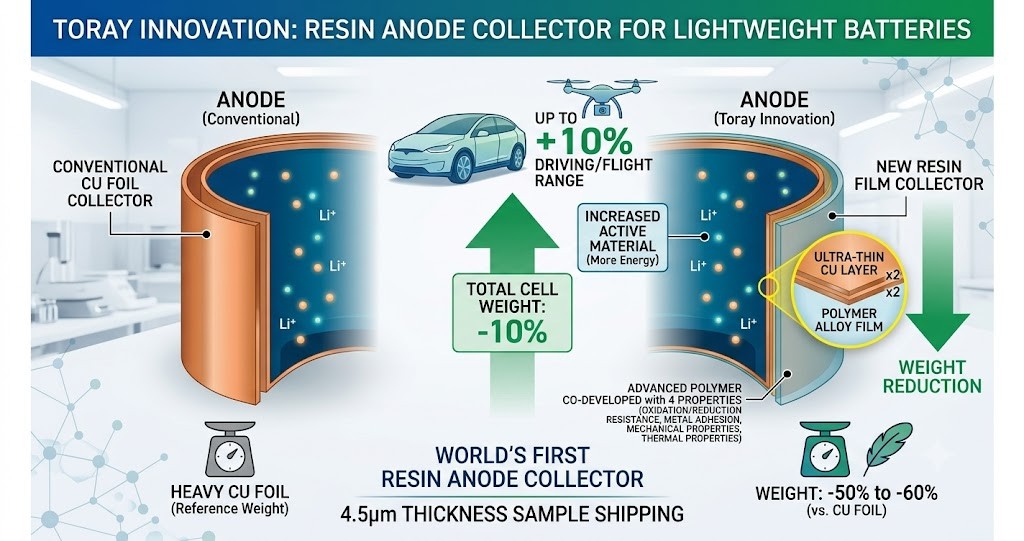
独自のポリマーアロイ(高分子複合化技術)と高次構造制御技術を活用し、負極集電体に要求される4つの必須特性(酸化/還元耐性・金属密着性・機械特性・熱特性)を全て同時にクリアした樹脂フィルム基材を世界で初めて開発しました。
技術的な強み・メリット
- 電池セル全体の約10%軽量化
- 従来の銅箔に比べ、集電体自体の重量を約50~60%削減。
- 電池セル全体でも約10%の軽量化を実現。
- 走行距離・駆動時間の延伸(最大約10%)
- 軽量化によって生じた重量余分を活物質(エネルギーを蓄える材料)の増量に充てることで、EV等の走行距離を最大約10%伸ばす試算結果を提示。
- 銅の使用量・コスト削減
- 樹脂表面に極薄の銅層を形成する構造のため、銅の使用量を大幅に減らし、材料コストの安定化に寄与。
- 高い実用性と量産性
- 従来の銅箔と同等の強度・耐熱性・電池性能(容量維持率など)を実証済み。
- すでに標準グレード(厚さ4.5μm)の広幅製膜(量産)に成功し、サンプル出荷を開始。
3. 【関連情報】技術の背景知識と市場における意義
① なぜ「負極」の樹脂化は難しかったのか?(補足情報)
正極(アルミ)に比べて、負極はリチウムイオンの挿入・脱離に伴い非常に強い還元雰囲気(強い化学反応が起きやすい状態)に晒されます。従来のPETや一般的な樹脂は、この強い還元力によって分子鎖が切断・劣化してしまい、長期間の電池使用に耐えられませんでした。東レはこの化学的耐久性のハードルをポリマーアロイ技術で克服しました。
② 次世代モビリティ(eVTOL・ドローン)への大きな貢献
EV以上に軽量化が至上命題であるeVTOL(「空飛ぶクルマ」などの電動垂直離着陸機)や産業用ドローンにおいて、電池の重量削減はペイロード(積載量)向上や安全性強化に直結します。本技術は、次世代のエアモビリティ産業を支える重要素材としても大きな期待が寄せられています。
4. 今後の展望
- 更なる薄膜化の推進:4.5μmからの更なる薄型・軽量化を検討中。
- 適用対象の拡大:
- 中小型電池:スマートフォン等のモバイル機器、ドローン、eVTOLなどでの早期実用化。
- 大型電池:EV(電気自動車)やESS(定置型エネルギー貯蔵装置)への適用を目指す。
出典:https://monoist.itmedia.co.jp/mn/articles/2607/30/news035.html
[Toray] 10% Lighter Batteries via “Copper-Free” Technology! The Breakthrough and Impact of the New Film Current Collector
With the widespread adoption and evolution of electric vehicles (EVs), drones, and mobile devices, there is a strong demand for lithium-ion batteries with higher energy density and lighter weight. Reducing battery weight is a critical challenge directly linked to extending EV driving ranges and increasing drone flight times.
In light of these needs, Toray Industries, Inc. announced on July 29, 2026, the development of the world’s first polymer film substrate capable of replacing the copper foil used in the anodes of lithium-ion batteries. While converting current collectors to resin has long been considered difficult, Toray’s new technology is expected to achieve an approximate 10% weight reduction in overall battery cells.
Below is a summary of the development background, technical features, and future outlook.
1. Development Background and Challenges
Limitations and Challenges of Conventional Technologies
- Role of Current Collectors: Conductive components that collect the electric current generated inside the battery and transport it to an external circuit. Conventionally, aluminum foil is used for the cathode, and copper foil is used for the anode.
- Weight and Cost of Copper: Copper foil is heavy, and price volatility alongside rising costs driven by tight global copper demand in recent years have posed significant challenges.
- Resin Degradation in Anode Environments: While research has been underway to substitute metal foils with resin film substrates (such as PET film for cathodes) to reduce weight, existing resins degrade under the highly reductive conditions of the anode environment.
2. Toray’s New Technology and Key Features
By leveraging its proprietary polymer alloy technology (polymer blending technology) and higher-order structure control technology, Toray has developed the world’s first polymer film substrate that simultaneously satisfies all four essential properties required for anode current collectors: oxidation/reduction resistance, metal adhesion, mechanical properties, and thermal properties.
Technical Strengths and Benefits
- ~10% Weight Reduction for the Entire Battery Cell
- Reduces the weight of the current collector itself by approximately 50–60% compared to conventional copper foil.
- Achieves an overall battery cell weight reduction of approximately 10%.
- Extended Driving Range and Operating Time (Up to ~10%)
- Calculations indicate that reallocating the saved weight margin to increase the amount of active materials (energy-storing materials) can extend EV driving ranges by up to roughly 10%.
- Reduced Copper Usage and Lower Costs
- The structure features an ultrathin copper layer formed on the resin surface, significantly cutting copper usage and contributing to material cost stabilization.
- High Practicality and Mass-Producibility
- Demonstrates strength, heat resistance, and battery performance (such as capacity retention) equivalent to conventional copper foil.
- Successful wide-width film formation (mass production) of the standard grade (4.5 μm thickness) has already been achieved, and sample shipping has commenced.
コメント