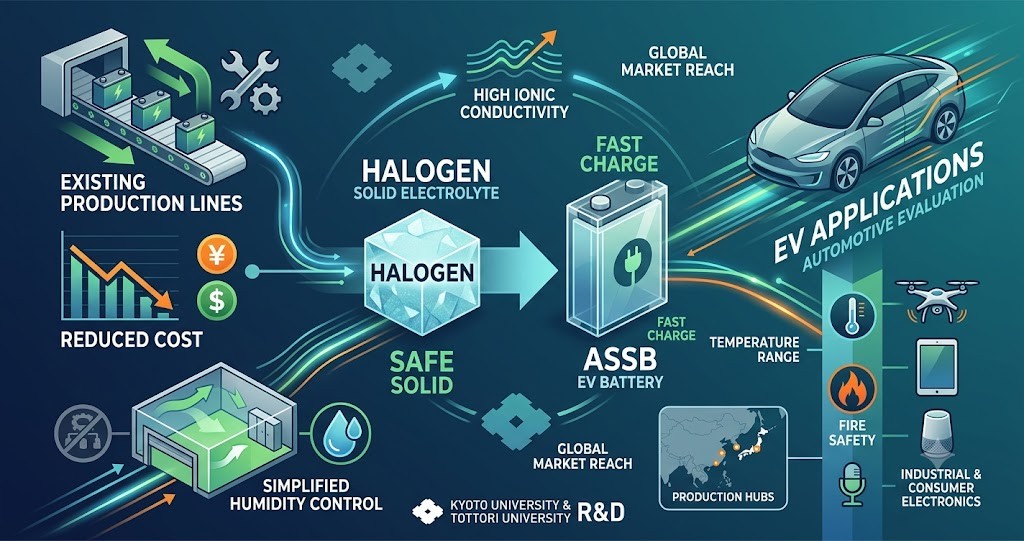
住友化学は、全固体電気自動車(EV)用電池に向けた新しい「ハロゲン系固形電解質」の量産準備を進めています。本技術は京都大学および鳥取大学との共同開発によるもので、従来の硫化物系電解質が抱えていたコストや製造上の課題を克服する次世代材料として注目されています。
1. 新材料の主な特長と優位性
- 高いイオン伝導性(充電速度の向上): 塩素などのハロゲン元素を組み合わせ、材料組成を最適化することで、これまで有望視されてきた硫化物系電解質と同等の優れた導電率を達成しました。
- 大幅な製造コスト削減: 硫化物系で必須とされる厳格な湿度管理(特殊なドライルーム設備等)が不要なため、現行の高性能リチウムイオン電池と同等のコスト水準で製造が可能です。
- 既存生産ラインの活用: 電池メーカーは大幅な設備投資を行わず、既存のリチウムイオン電池の生産設備やプロセスをそのまま応用して製造できます。
2. 今後の展開と対象市場
- 量産体制の構築: 日本国内に最初の量産拠点を整備する計画であり、現在は自動車メーカーや電池メーカー等の顧客による製品評価が進められています。
- 幅広い用途拡大: 高度な安全性が求められるEV分野に加え、温度変化への耐性や耐火性を生かし、各種電子機器や産業用機器などへの展開も見込まれています。
【関連情報・背景解説】
- 全固体電池(SSB)のタイプ別特徴:
- 硫化物系: イオン伝導性が高く本命視されるが、水と反応して有毒な硫化水素ガスを発生するリスクがあり、厳重な湿度管理が必要で製造コストが高い。
- 酸化物系: 大気中で安定しており安全性が高いが、硬いため電極との密着性を保つのが難しく、イオン伝導性も比較的低い。
- ハロゲン系(今回の技術): 硫化物系の「高伝導性」と酸化物系の「取り扱いやすさ・安全性」を兼ね備えた第3の選択肢として、世界的に開発競争が激化しています。
- 住友化学の電池材料戦略: 住友化学はこれまでもリチウムイオン電池用のセパレータ(分離膜)や正極材などを手がける大手部材メーカーです。従来の液系電池部材で培った知見を生かし、全固体電池時代においても材料供給のデファクトスタンダード(事実上の標準)を狙う戦略的な位置づけとなっています。
Sumitomo Chemical Accelerates Product Evaluation of Halide-Based Solid Electrolytes for Solid-State Batteries Compatible with Existing Equipment
Sumitomo Chemical is preparing for mass production of a new “halide-based solid electrolyte” intended for all-solid-state electric vehicle (EV) batteries. Jointly developed with Kyoto University and Tottori University, this material is garnering attention as a next-generation technology that overcomes the cost and manufacturing challenges associated with conventional sulfide-based electrolytes.
1. Key Features and Advantages of the New Material
- High Ionic Conductivity (Faster Charging Speeds): By incorporating halogen elements such as chlorine and optimizing the material composition, the electrolyte achieves excellent conductivity comparable to sulfide-based alternatives long considered most promising.
- Significant Reduction in Manufacturing Costs: Because it eliminates the need for strict humidity control (such as specialized dry rooms) required for sulfide-based materials, manufacturing costs can be kept on par with current high-performance lithium-ion batteries.
- Utilization of Existing Production Lines: Battery manufacturers can adopt this material using their existing lithium-ion battery production equipment and processes without requiring massive capital investments.
2. Future Plans and Target Markets
- Establishing Mass Production Systems: The company plans to establish its initial mass production base in Japan, with customer product evaluations currently underway by automakers and battery manufacturers.
- Expanding Application Horizons: In addition to EV applications where high safety is critical, the material’s thermal stability and fire resistance open up potential uses in various electronic products and industrial equipment.
[Related Information and Background]
- Characteristics of All-Solid-State Battery (SSB) Types:
- Sulfide-Based: Highly favored for high ionic conductivity, but reacts with moisture to generate toxic hydrogen sulfide gas, requiring strict humidity control and resulting in high manufacturing costs.
- Oxide-Based: Stable in air and highly safe, but hard materials make maintaining contact with electrodes difficult, resulting in relatively lower ionic conductivity.
- Halide-Based (This Technology): Combines the “high conductivity” of sulfide systems with the “ease of handling and safety” of oxide systems, emerging as a competitive third choice in global development.
- Sumitomo Chemical’s Battery Materials Strategy: Sumitomo Chemical is a major component manufacturer previously producing separators and cathode materials for conventional lithium-ion batteries. Leveraging insights gained from liquid battery components, the company aims to position itself as a de facto standard supplier for the all-solid-state battery era.
コメント