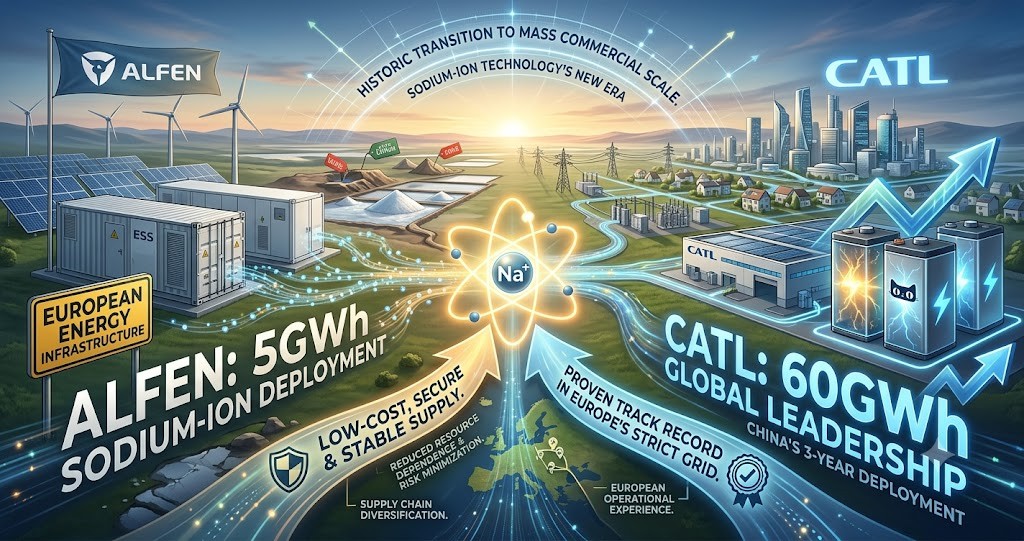
2026年7月、オランダのエネルギー貯蔵システム(ESS)大手であるAlfen(アルフェン)と、車載・定置用バッテリーで世界最大のシェアを誇る中国のCATLが、欧州で合計5GWh(ギガワット時)に及ぶナトリウムイオン電池蓄電システムを導入することで合意しました。
この合意は、これまでリチウムイオン電池(特にLFP:リン酸鉄リチウム電池)が主導してきた世界の定置型蓄電市場において、ナトリウムイオン技術が「研究・パイロット導入」の段階を終え、「大規模な商用展開」のフェーズへ完全に移行したことを示す歴史的な転換点です。地政学的リスクや資源の偏在、リチウム価格の乱高下に直面する欧州のエネルギーインフラにおいて、低コストで安全、かつ資源制約の少ない新技術としての価値が実証されようとしています。
1. 提携の概要と両社の戦略的メリット
長期的なパートナーシップの進化
両社は元々、リチウムイオン電池をベースとした蓄電プロジェクトで協力関係にありました。2023年の長期電池供給契約、2024年の契約拡大(欧州市場でのAlfenの需要拡大に対応)を経て、今回の5GWhに及ぶナトリウムイオン電池の導入合意へと至りました。
Alfenの戦略的意図(導入側)
- サプライチェーンの多角化: 蓄電製品ポートフォリオの材料を分散し、特定資源への依存を減らす。
- コスト構造の最適化とリスク低減: 乱高下しやすいリチウム価格の変動リスクを回避する。
- 競争力の強化: 欧州における中規模および大規模貯蔵プロジェクトの入札において、より低価格なソリューションを提示し、優位性を確保する。
CATLの戦略的意図(供給側)
- 欧州での運用実績(トラックレコード)の獲得: 欧州の厳格な系統連系(グリッド)要件への適応性を実証する。
- 国際展開の加速: 中国国内(4月に発表されたHyperStrong向けの3年間・60GWh供給契約など)での実績をベースに、海外の定置型蓄電市場での標準化をリードする。
2. ナトリウムイオン電池の技術仕様とブレイクスルー
CATLは2016年以降、ナトリウムイオン電池の研究開発に約100億RMB(人民元、約12億ユーロ)を投資してきました。今回のシステムに採用されるセルは、量産化における主要な課題(エネルギー密度の向上や水分制御など)を克服した最新世代です。
主要な性能・仕様
- セル容量: 300Ah以上
- エネルギー密度: 約160Wh/kg
- システム効率: 97%
- サイクル寿命: 15,000サイクル以上(容量維持率80%を維持)
- 動作温度範囲: マイナス40℃から 70℃(極低温から高温まで優れた特性を発揮)
- 対象用途: 2時間から8時間持続する定置型蓄電、再生可能エネルギー(再エネ)の系統統合、共有ストレージシステム、データセンター(UPS)など。
既存システムとの互換性によるコスト削減
新開発のナトリウムイオンセルは、既存のリチウムイオン電池セル形式である「587Ahサイズ」と物理的な互換性を維持できるように設計されています。これにより、システムインテグレーター(Alfenなど)は既存のパック・ラック設計や製造ラインを大幅に変更することなく統合でき、導入コストを最小限に抑えられます。
材料組成と圧倒的な安全性
- 電極材料: 硬質炭素(Hard Carbon)アノードと、層状酸化物(Layered Oxide)カソードを採用。
- 脱コバルト・ニッケル: 高価で供給リスクのあるコバルトやニッケルを一切使用しない。
- アルミニウムの活用: リチウムイオン電池の負極集電体で使われる銅の代わりに、安価なアルミニウムを正極・負極の両方に使用。
- 高い安全性: 釘刺し試験、圧壊試験、過充電試験において熱暴走(サーマルランナウェイ)を起こさない高い安全性を実証済み。
3. 市場背景と経済的合理性(LFPとの比較)
ナトリウムイオン電池の商用化は、これまで急激に値下がりしたLFP(リン酸鉄リチウム)電池とのコスト競争に阻まれてきました。一時はLFPセルレベルで約50USD/kWhまで下落しましたが、直近の動向が流れを変えています。
- LFPの価格上昇: リチウム供給の逼迫と世界的な需要増により、主要な314Ah容量のLFP蓄電池価格は過去6ヶ月間で約20%上昇しています。
- ナトリウムイオンのコスト優位性: CATLは、今回の5GWh規模の量産化初期段階を経て、将来的にはLFP電池に対して「30%から40%のコスト優位性」を達成できると試算しています。
主原料であるナトリウム(塩化ナトリウムなど)は地球上にほぼ無限に存在するため、リチウムのような地政学的・資源的なボトルネックが存在しません。今回のAlfenとの大型契約は、欧州のESS市場が「リチウム単一依存」から「リチウムとナトリウムの共存・補完」へとシフトする強力なシグナルとなっています。
A Turning Point in the European ESS Market: Alfen and CATL Agree to Deploy 5GWh of Sodium-Ion Energy Storage Systems
In July 2026, Alfen, a major European energy storage system (ESS) provider based in the Netherlands, and CATL, China’s world-leading supplier of automotive and stationary batteries, reached an agreement to deploy a total of 5GWh (gigawatt-hours) of sodium-ion battery energy storage systems across Europe.
This agreement marks a historic turning point in the global stationary energy storage market, which has long been dominated by lithium-ion batteries—specifically LFP (lithium iron phosphate). It signals that sodium-ion technology has successfully moved beyond the “R&D and pilot deployment” phase and into the era of “large-scale commercialization.” As the European energy infrastructure faces geopolitical risks, resource concentration, and volatile lithium prices, this new technology is set to demonstrate its value as a low-cost, safe, and resource-abundant solution.
1. Partnership Overview and Strategic Advantages
Evolution of a Long-Term Partnership
The two companies originally established their collaboration through lithium-ion battery storage projects. Following a long-term battery supply agreement in 2023 and an expanded contract in 2024 to meet Alfen’s growing demand in Europe, this relationship has now culminated in the 5GWh sodium-ion deployment agreement.
Strategic Intent of Alfen (The Integrator)
- Supply Chain Diversification: Diversifying materials within its energy storage portfolio to reduce reliance on specific scarce resources.
- Cost Optimization and Risk Mitigation: Hedging against the high price volatility of lithium.
- Enhanced Competitiveness: Offering more cost-effective solutions to secure a competitive edge in bids for mid- to large-scale storage projects in Europe.
Strategic Intent of CATL (The Supplier)
- Gaining Track Record in Europe: Demonstrating compliance and operational viability under Europe’s stringent grid connection requirements.
- Accelerating International Expansion: Leveraging its domestic achievements—such as the 3-year, 60GWh supply agreement with HyperStrong announced in April—to lead standardization efforts in overseas stationary ESS markets.
2. Technical Specifications and Breakthroughs of Sodium-Ion Batteries
Since 2016, CATL has invested approximately 10 billion RMB (approx. 1.2 billion euros) in the research and development of sodium-ion batteries. The cells utilized in this project represent the latest generation, having overcome critical mass-production hurdles such as energy density improvement and moisture control.
Key Performance and Specifications
- Cell Capacity: 300Ah or higher
- Energy Density: Approx. 160Wh/kg
- System Efficiency: 97%
- Cycle Life: Over 15,000 cycles (maintaining an 80% capacity retention rate)
- Operating Temperature Range: -40 deg C to 70 deg C (demonstrating excellent performance from extreme cold to high heat)
- Target Applications: Stationary energy storage lasting 2 to 8 hours, renewable energy integration, shared storage systems, and data centers (UPS).
Cost Reduction via Backward Compatibility
The newly developed sodium-ion cells are physically designed to be compatible with the existing “587Ah size” lithium-ion cell format. This enables system integrators like Alfen to integrate the new cells without making major overhauls to their existing pack/rack designs or production lines, keeping deployment costs to a minimum.
Material Composition and Superior Safety
- Electrode Materials: Features a Hard Carbon anode and a Layered Oxide cathode.
- Elimination of Cobalt and Nickel: Completely free of expensive and supply-vulnerable cobalt and nickel.
- Utilization of Aluminum: Instead of copper, which is typically used for the negative electrode current collectors in lithium-ion batteries, inexpensive aluminum is used for both the positive and negative electrodes.
- High Safety Profile: Proven to withstand nail penetration, crushing, and overcharging tests without triggering thermal runaway.
3. Market Context and Economic Viability (Comparison with LFP)
Until now, the commercialization of sodium-ion batteries has been hindered by intense cost competition from LFP batteries, which saw prices plunge to around 50USD/kWh at the cell level. However, recent market dynamics have shifted the landscape.
- Rising LFP Prices: Driven by tight lithium supplies and surging global demand, the price of mainstream 314Ah LFP energy storage batteries has risen by roughly 20% over the past six months.
- Cost Advantage of Sodium-Ion: CATL projects that through this initial 5GWh scale production phase, sodium-ion technology will eventually achieve a 30% to 40% cost advantage over LFP batteries.
Because the primary raw material, sodium (derived from sources like sodium chloride), is virtually abundant worldwide, it does not suffer from the geopolitical or resource bottlenecks associated with lithium. This landmark contract with Alfen sends a clear signal that the European ESS market is shifting from a sole reliance on lithium toward a complementary ecosystem where lithium and sodium coexist.
コメント