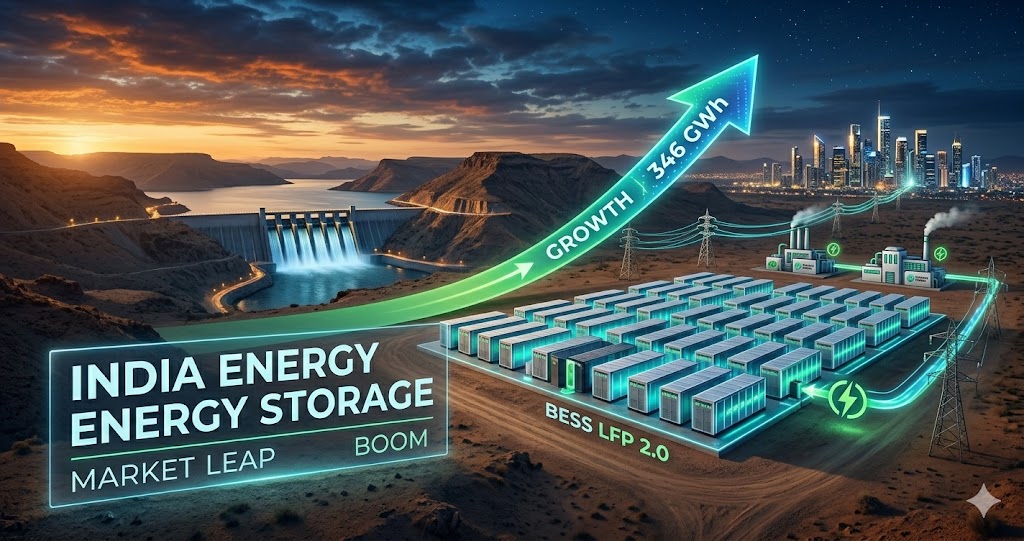
インドエネルギー貯蔵アライアンス(IESA)が発表した白書により、インドが世界有数のエネルギー貯蔵市場へと急成長する見通しが明らかになりました。
1. 爆発的な市場成長予測
- 設置容量の推移: 現在の1GWh未満から、2033年までに346GWh(基本シナリオ)へと急拡大する見込み。政策の進展次第では544GWhに達する可能性もあります。
- 計画中のプロジェクト: 現在、過去最高となる92GWhのBESS(バッテリーエネルギー貯蔵システム)プロジェクトが計画段階にあります。
- 入札の加速: 過去1年間で69件(計102GWh)の新規入札が開始され、前年比で件数がほぼ倍増しています。
2. 多様な貯蔵技術の導入
- 揚水発電 (PHES): バッテリーだけでなく揚水発電も重視されており、2025年の7GWから2033年には107GWへの拡大が予測されています。
- 背景: インドの電力網では最大90GWに達する需要変動が発生しており、24時間体制の電力供給(Round-the-Clock power)を確保するために、柔軟な蓄電インフラが不可欠となっています。
3. 成長を支える政策支援
- 蓄電義務 (ESO): 電力構成に一定割合の蓄電導入を義務付け。
- 資金援助 (VGF): 事業性ギャップ資金(Viability Gap Funding)による補助金。
- 規制緩和: 蓄電システムの正式な法的認定や、州間送電網(ISTS)利用料の100パーセント免除など、投資魅力を高める施策が講じられています。
関連情報:背景と市場のポイント
BESS(Battery Energy Storage System)の役割
太陽光や風力などの再生可能エネルギーは発電量が天候に左右されます。BESSは、昼間に余った電力を蓄え、夜間や需要ピーク時に放出することで、グリッド(送電網)の安定化に寄与します。
インドの「2030年目標」との連動
インド政府は2030年までに「非化石燃料による発電能力を500GWにする」という野心的な目標を掲げています。この膨大な再エネを無駄なく活用するためには、今回発表されたような大規模な蓄電インフラの整備が前提条件となります。
なぜ今、インドなのか(コストと供給網)
- コスト低下: リチウムイオン電池の国際価格の下落が、インドのような価格に敏感な市場での導入を後押ししています。
- 製造の国産化: インド政府は「生産連動型優遇策(PLIスキーム)」を通じて、国内でのバッテリーセル製造を推進しており、輸入依存からの脱却を図っています。
揚水発電(PHES)の再評価
化学電池(BESS)は短時間の変動調整に優れますが、揚水発電はより大規模かつ長時間の電力貯蔵に適しています。インドは地形的にも揚水発電の適地が多く、バッテリーと組み合わせた「ハイブリッド貯蔵」が今後の主流になると見られています。
India to Rapidly Expand Storage Capacity to 346GWh by 2033: Becoming a Pioneer in Renewable Energy Transition
A white paper released by the India Energy Storage Alliance (IESA) reveals that India is on track to rapidly become one of the world’s leading energy storage markets.
1. Explosive Market Growth Forecast
- Projected Capacity: Cumulative installed capacity is expected to surge from less than 1GWh today to 346GWh by 2033 (Base Scenario). Under an accelerated policy scenario, this could reach 544GWh.
- Projects in Pipeline: A record 92GWh of BESS (Battery Energy Storage System) projects are currently in the planning stage.
- Accelerated Tendering: In the past year, 69 new tenders totaling 102GWh were launched, nearly doubling the number of annual tenders compared to the previous year.
2. Adoption of Diverse Storage Technologies
- Pumped Hydro Energy Storage (PHES): Significant emphasis is being placed on PHES alongside batteries, with capacity projected to expand from 7GW in 2025 to 107GW by 2033.
- Background: India’s power grid experiences demand fluctuations of up to 90GW. Flexible storage infrastructure is essential to ensure “Round-the-Clock” (RTC) power supply.
3. Policy Support Driving Growth
- Energy Storage Obligation (ESO): Mandates a specific percentage of energy storage within the power mix.
- Financial Assistance (VGF): Subsidies provided through Viability Gap Funding.
- Regulatory Reforms: Initiatives to enhance investment attractiveness include the formal legal recognition of storage systems and a 100 percent waiver of Inter-State Transmission System (ISTS) charges.
Related Information: Background and Market Key Points
The Role of BESS (Battery Energy Storage System)
Renewable energy sources like solar and wind are weather-dependent. BESS contributes to grid stabilization by storing excess electricity generated during the day and discharging it at night or during peak demand periods.
Alignment with India’s “2030 Targets”
The Indian government has set an ambitious goal to achieve 500GW of non-fossil fuel power generation capacity by 2030. Developing large-scale storage infrastructure is a prerequisite to effectively utilizing this massive renewable energy output.
Why India Now? (Costs and Supply Chain)
- Falling Costs: The decline in international prices for lithium-ion batteries is encouraging adoption in price-sensitive markets like India.
- Localization of Manufacturing: Through the “Production Linked Incentive (PLI) Scheme,” the Indian government is promoting domestic battery cell manufacturing to reduce import dependency.
Re-evaluation of Pumped Hydro Energy Storage (PHES)
While chemical batteries (BESS) excel at short-duration adjustments, PHES is better suited for larger-scale and long-duration energy storage. India has many geographically suitable sites for PHES, and “hybrid storage” combining both batteries and hydro is expected to become the mainstream approach.
コメント