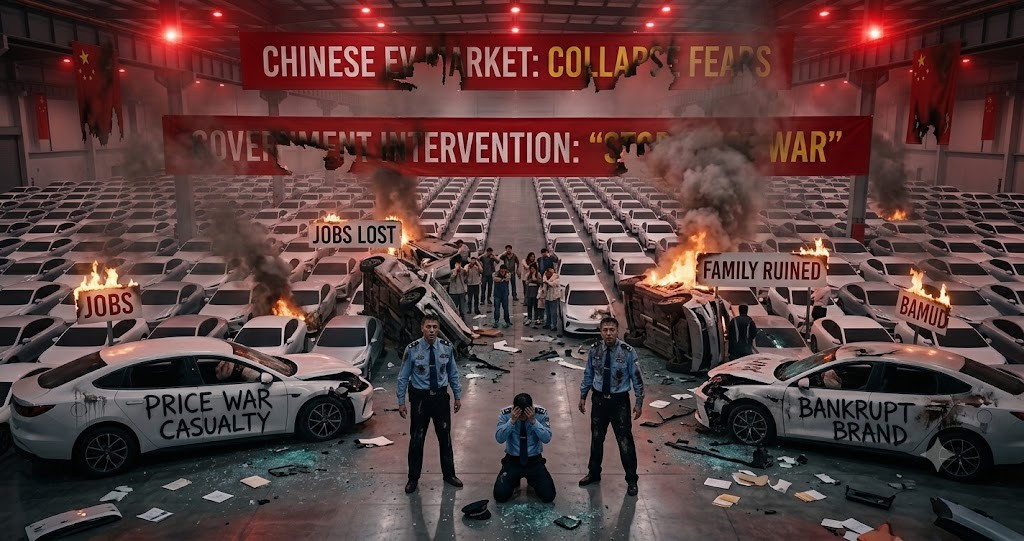
中国の自動車市場、特に電気自動車(EV)をはじめとする新エネルギー車(NEV)セクターでは、シェア獲得をめぐる過酷な「価格戦(値下げ競争)」が続いています。販売台数は伸びているものの、各メーカーの利益は極限まで削られており、業界全体が消耗戦に陥っています。
この状況を危惧した中国政府(当局)は、ついに過当競争を是正するための介入に乗り出しました。かつて中国経済を揺るがした不動産大手・恒大集団の経営破綻(恒大ショック)のような連鎖危機が、自動車業界でも起きかねないとの懸念が背景にあります。
- 1. 中国当局による異例の是正介入
- 2. 激化する価格競争の背景と「構造的矛盾」
- 3. 【関連補完情報】なぜ「第二の恒大ショック」が懸念されるのか?
- 4. 今後の見通し:9割のブランドが淘汰される未来
- 1. Unprecedented Regulatory Intervention by Chinese Authorities
- 2. Background of the Intense Price War and “Structural Contradictions”
- 3. [Supplementary Information] Why is a “Second Evergrande Shock” Feared?
- 4. Future Outlook: A Future Where 90 Percent of Brands Are Eliminated
1. 中国当局による異例の是正介入
中国の規制当局は、自動車メーカーによる行き過ぎた値下げやダンピング(不当廉売)行為に歯止めをかけるため、相次いで規制や指導を打ち出しています。
- 自動車メーカーへのヒアリング(2026年6月11日): 中国工業情報化部と中国国家市場監督管理総局が、行き過ぎた競争の疑いがあるメーカーを呼び出し、注意喚起を行いました。「価格法」などの遵守、価格コンプライアンスの強化、健全な競争環境の維持を厳格に求めています。
- サプライチェーンへの拡大(3月・4月): 当局は3月にNEV業界の秩序是正や「60日以内の支払い」の徹底を指導。4月にはこの対象を「駆動用バッテリーおよび蓄電池業界」にまで拡大し、サプライチェーン全体での共倒れを防ぐ動きを見せています。
2. 激化する価格競争の背景と「構造的矛盾」
この激しい価格競争は、単なる一時的なトレンドではなく、市場の構造的な歪みが表面化したものです。
- ガソリン車からNEVへの急激なシフト: 2026年5月の新エネルギー乗用車の小売浸透率は過去最高の62.9パーセントに達し、ガソリン車のシェアは37.1パーセクトまで縮小しました。電動化は予測を超えるスピードで進んでいます。
- 市場全体の縮小とパイの奪い合い: 一方で、自動車市場全体の成長は頭打ちです。全国乗用車市場情報連合会(CPCA)は、2026年の乗用車小売販売台数の伸び率予想を「マイナス11パーセント」へと下方修正しました。
- 生産能力の過剰とブランドの乱立: 市場が縮小する中で、過剰な生産能力を持った膨大な数のブランドが乱立し、市場が吸収しきれないほどの新車が供給された結果、値下げに頼るしかなくなっています。
3. 【関連補完情報】なぜ「第二の恒大ショック」が懸念されるのか?
不動産バブル崩壊との類似点
かつての恒大集団をはじめとする中国の不動産ディベロッパーは、過度な債務(借金)を抱えながら急成長を続け、市場の冷え込みとともに資金繰りが行き詰まり破綻しました。現在のEV業界も同様に、資金調達に頼った赤字覚悟の値下げ競争を続けており、資金繰りやサプライチェーンの最も弱い環から連鎖倒産が起きるリスクが指摘されています。
テスラやBYDが主導した価格戦
この消耗戦は、米テスラや中国大手のBYDが仕掛けた大規模な値下げ攻勢に、中堅・新興のEVメーカーが追随せざるを得なくなったことで泥沼化しました。利益を無視したシェア争いの結果、すでにいくつかの新興EVブランドは事実上の経営破綻に追い込まれています。
4. 今後の見通し:9割のブランドが淘汰される未来
米コンサルティング会社アリックスパートナーズの調査(2025年7月公表)によると、中国には2024年時点でEVやプラグインハイブリッド車(PHV)を販売するブランドが「129」も存在していました。
しかし同社は、2030年までに財務の健全性を維持して生き残れるブランドはわずか15前後にとどまると予測しています。
つまり、今後数年のうちに現在ある自動車ブランドの約9割が、倒産するか、業界再編の中で市場からの退出を余儀なくされる見込みです。当局の介入は、この「大淘汰時代」による経済や雇用へのショックを軟着陸(ソフトランディング)させるための苦肉の策と言えます。
[Evergrande Shock, Is EV Next?] Authorities Intervene to Rectify the Chinese Auto Industry Entrenched in a War of Attrition
In the Chinese automotive market, particularly the New Energy Vehicle (NEV) sector including electric vehicles (EVs), a brutal “price war” (intense discounting) continues to rage over market share. While sales volume is growing, the profit margins of individual manufacturers are being slashed to the bone, plunging the entire industry into a war of attrition.
Deeply concerned by this situation, the Chinese government authorities have finally taken action to intervene and rectify this excessive competition. The underlying fear is that a chain-reaction crisis, similar to the collapse of real estate giant Evergrande Group (the Evergrande Shock) which previously shook the Chinese economy, could erupt within the automotive industry.
1. Unprecedented Regulatory Intervention by Chinese Authorities
Chinese regulatory agencies are introducing a series of rules and directives to put the brakes on excessive price cuts and predatory dumping practices by automakers.
- Hearings with Automakers (June 11, 2026): The Ministry of Industry and Information Technology (MIIT) and the State Administration for Market Regulation (SAMR) summoned manufacturers suspected of engaging in excessive competition to issue a formal warning. They strictly demanded compliance with the “Price Law,” reinforcement of pricing compliance, and the maintenance of a healthy competitive environment.
- Expansion into the Supply Chain (March and April): In March, authorities issued guidance to restore order to the NEV industry and enforce a strict commitment to “payment within 60 days.” In April, they expanded the scope of these measures to include the traction battery and energy storage industry, moving to prevent a domino-effect collapse across the entire supply chain.
2. Background of the Intense Price War and “Structural Contradictions”
This fierce price competition is not merely a temporary trend, but the manifestation of deep structural distortions within the market.
- Rapid Shift from Gasoline Cars to NEVs: In May 2026, the retail penetration rate of new energy passenger vehicles hit a record high of 62.9 percent, while the market share of gasoline cars shrank to 37.1 percent. Electrification is progressing at a pace far exceeding expectations.
- Shrinking Overall Market and Battle over a Smaller Pie: On the flip side, growth in the overall automotive market has plateaued. The China Passenger Car Association (CPCA) downgraded its 2026 forecast for retail passenger vehicle sales growth to minus 11 percent.
- Overcapacity and a Glut of Brands: As the market contracts, a massive number of brands with excess production capacity are crowded together. This has resulted in a supply of new vehicles that the market cannot absorb, leaving companies with no choice but to rely on heavy discounting.
3. [Supplementary Information] Why is a “Second Evergrande Shock” Feared?
Similarities to the Real Estate Bubble Burst
In the past, Chinese property developers like Evergrande Group continued to grow rapidly while saddled with excessive debt. When the market cooled, their cash flows dried up, leading to bankruptcy. The current EV industry faces a similar risk; companies are locked in a loss-making price war funded primarily by outside financing. Analysts point out that a wave of consecutive bankruptcies could easily trigger from the weakest links in cash flow and the supply chain.
Price War Triggered by Tesla and BYD
This war of attrition turned into a quagmire after major players like US-based Tesla and China’s BYD initiated massive price-cutting offensives. Second-tier and emerging EV manufacturers were forced to follow suit just to survive. As a result of this profit-ignoring battle for market share, several emerging EV brands have already collapsed into de facto bankruptcy.
4. Future Outlook: A Future Where 90 Percent of Brands Are Eliminated
According to a “Global Automotive Outlook” published in July 2025 by the US consulting firm AlixPartners, there were as many as 129 brands selling EVs and Plug-in Hybrid Vehicles (PHVs) in China as of 2024.
However, the firm predicts that only around 15 brands will manage to maintain financial health and survive by 2030.
This means that roughly 90 percent of the automotive brands currently in existence are projected to go bankrupt or be forced out of the market through industry restructuring over the next few years. The regulatory intervention by authorities can be seen as a desperate measure to ensure a soft landing, mitigating the economic and employment shocks of this upcoming “Era of Mass Elimination.”
コメント