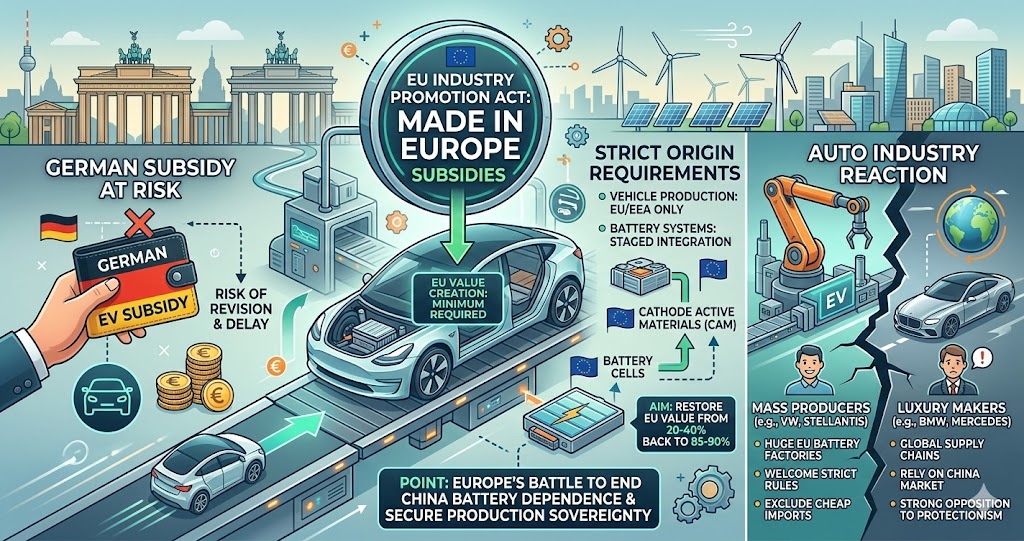
2026年2月27日、ドイツの電動モビリティ産業を揺るがす議論が浮上しています。ドイツ連邦政府が計画していた「電気自動車への社会保障補助金」が、欧州連合(EU)が検討中の新法「産業促進法(Industry Promotion Act)」によって、大幅な見直しや遅延を迫られるリスクが出てきました。
ニュースの核心:補助金の条件は「Made in Europe」
EU委員会が草案を作成した「産業促進法」は、域内産業を中国などアジア勢の攻勢から守るため、公的補助金の対象を厳格に制限する内容となっています。
- 原産地要件の厳格化: 補助金の対象は、EUまたは欧州経済領域(EEA)内で生産され、一定以上の「欧州価値創造(現地調達率)」を満たす車両に限定されます。
- バッテリーへの抜本的規制: 段階的計画により、将来的にはバッテリーシステムだけでなく、バッテリーセルや正極活物質(CAM)までもがEU産であることが求められます。
- 価値創造の回復: 内燃機関車では85から90%だった欧州内での付加価値が、現在のEVでは20から40%に低下している現状を打破する狙いがあります。
業界の反応:二分される自動車メーカー
この規制案は、欧州メーカーの間でも利害が対立し、業界に亀裂を生んでいます。
- 量産メーカー(VW、ステランティス): 巨額を投じて欧州内に自社バッテリー工場を建設しており、安価なアジア車を排除できる厳格な規制を歓迎。
- 高級車メーカー(BMW、メルセデス・ベンツ): グローバルなサプライチェーンと中国市場への依存度が高いため、貿易戦争を招く保護主義的な動きに強く反対。
関連情報と背景解説
記事をより深く理解するための3つの補足情報です。
1. バッテリーの現地生産状況
現在、欧州で販売されるEVの多くは、依然として中国のCATLやBYD、韓国のLG Energy Solutionなどのバッテリーセルに依存しています。
- 課題: 欧州産バッテリーへの完全な切り替えには、セルの製造だけでなく、リチウムやグラファイトなどの原材料精製や正極材製造といった上流工程の整備が必要ですが、これには数年単位の時間がかかります。
2. 仏ルノーの先行事例「Ampere(アンペア)」
記事内で言及されているルノーの事例は、EUが目指すモデルケースです。
- 垂直統合: フランス北部の「Ampere ElectriCity」ネットワークでは、モーターやバッテリー、主要部品を近接した工場で製造し、生産コストの50%以上をフランス国内で発生させています。これにより、新たなEU規制下でも補助金受給資格を維持できる可能性が高いとされています。
3. ドイツ政府のジレンマ
ドイツ連邦環境省(BMUV)は、早期導入を目指す一方で、EU法との整合性に苦慮しています。
- 現行の法的枠組み: 環境省は「現時点では現行法に基づいて実施する」としていますが、将来的にEU法が発効した際、遡及的または途中で条件が変更される「修正リスク」を抱えています。
消費者と市場への影響
現時点でEVを購入・注文しようとしている消費者は、以下のリスクに直面しています。
- 補助金の不支給: 注文した車両が「欧州原産」基準を満たさない場合、予定していた補助金が受け取れず、全額自己負担になる可能性があります。
- 市場の停滞: 補助金の条件が不透明なため、購入を控える買い控えが起き、ドイツの電動化目標に遅れが生じる懸念があります。
ポイント: 今回の騒動は、単なる予算の問題ではなく、欧州が「中国依存を脱却し、自域内でどこまでバッテリー産業を完結させられるか」という産業政策の主導権争いを象徴しています。
出典:https://edison.media/politik/kippt-bruessel-die-deutsche-e-auto-praemie/25265954/
Rift in the European Auto Industry: The Battle Between “Protectionism” and “Free Trade” Over EV Subsidies
On February 27, 2026, a debate has emerged that is shaking Germany’s electromobility industry. The German federal government’s planned “social security subsidies for electric vehicles” face the risk of major revisions or delays due to the proposed “Industry Promotion Act,” a new law currently being drafted by the European Union (EU).
Core of the News: Subsidies Conditioned on “Made in Europe”
The “Industry Promotion Act,” drafted by the EU Commission, aims to protect regional industries from the offensive of Asian competitors, particularly China, by strictly limiting the scope of public subsidies.
- Strict Rules of Origin: Subsidies will be restricted to vehicles produced within the EU or European Economic Area (EEA) that meet a minimum threshold for “European Value Creation” (local content rate).
- Radical Battery Regulations: Under a phased plan, requirements will eventually extend beyond battery systems to include battery cells and Cathode Active Materials (CAM), all of which must be produced within the EU.
- Restoring Value Creation: The act seeks to reverse the sharp decline in domestic value creation, which has dropped from 85–90% for internal combustion engine vehicles to just 20–40% for many current EV models.
Industry Reaction: A Divided Automotive Sector
This proposed regulation has sparked conflicting interests among European manufacturers, creating a rift within the industry.
- Mass-Market Manufacturers (VW, Stellantis): Having invested billions in building their own battery factories in Europe, they welcome strict regulations that could exclude cheaper Asian imports.
- Premium Manufacturers (BMW, Mercedes-Benz): With high dependence on global supply chains and the Chinese market, they strongly oppose protectionist moves that could trigger a trade war.
Related Information and Background Commentary
Three key points to better understand the current situation:
1. Local Battery Production Status
Many EVs currently sold in Europe still rely on battery cells from companies like China’s CATL and BYD, or South Korea’s LG Energy Solution.
- The Challenge: Transitioning completely to European-made batteries requires not just cell manufacturing, but also the development of upstream processes like raw material refining (lithium, graphite) and cathode production—a process that will take several years.
2. Renault’s Leading Case: “Ampere”
Renault’s strategy, mentioned in the report, serves as the model the EU is striving for.
- Vertical Integration: Through the “Ampere ElectriCity” network in Northern France, motors, batteries, and key components are manufactured in proximity. Over 50% of production costs are generated within France, making it highly likely to maintain subsidy eligibility under new EU rules.
3. The German Government’s Dilemma
The German Federal Ministry for the Environment (BMUV) is struggling to align its goal of rapid EV adoption with EU law.
- Current Framework: While the Ministry states it will proceed under existing laws for now, there is a significant “revision risk.” Once the EU law takes effect, subsidy conditions may be retroactively or abruptly changed to comply with Brussels.
Impact on Consumers and the Market
Consumers currently looking to purchase or order an EV face the following risks:
- Non-payment of Subsidies: If the ordered vehicle fails to meet “European Origin” standards, the buyer may be forced to cover the full cost without the expected financial aid.
- Market Stagnation: Uncertainty regarding subsidy conditions may lead to “wait-and-see” behavior among buyers, potentially delaying Germany’s national electrification targets.
Key Point: This turmoil is more than just a budget dispute. It symbolizes a struggle for leadership in industrial policy, as Europe attempts to break its dependence on China and complete the battery industry lifecycle within its own borders.

コメント