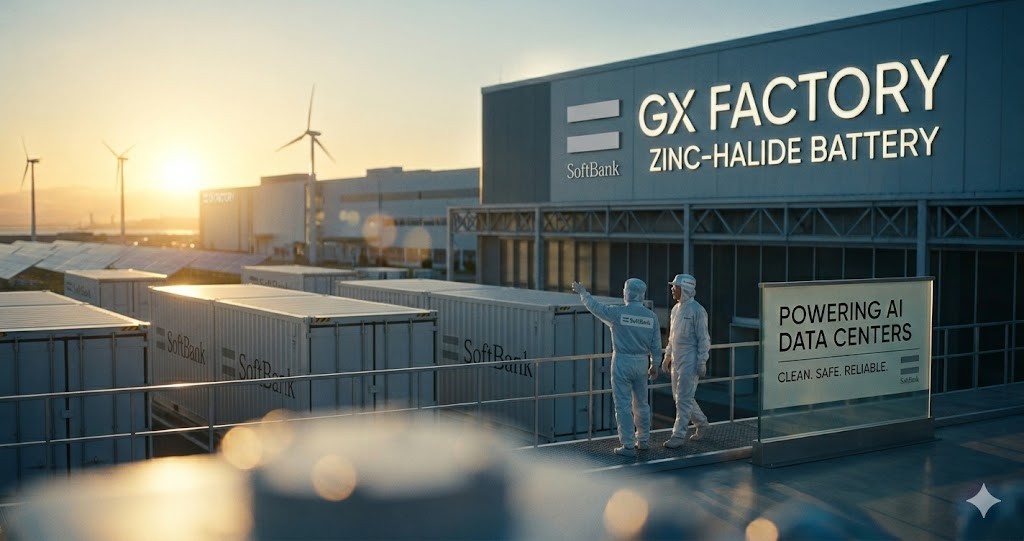
ソフトバンクは、AIの普及に伴い急増するデータセンターの電力需要を支えるため、レアメタルを使用しない「亜鉛ハロゲン化物電池」の国内製造に乗り出します。大阪府堺市の旧シャープ工場跡地を活用し、発電・蓄電・AI演算を一体化させた「垂直統合型」の拠点形成を目指します。
1. 事業計画とスケジュール
- 拠点: シャープ堺工場跡地に新設される「GXファクトリー」。
- 製造開始: 2027年度よりバッテリーセルおよび蓄電システム(BESS)の製造を開始。
- 量産規模: 2028年度をめどに年間 1GWh(ギガワット時)規模の体制を確立し、国内最大級を目指す。
- 売上目標: 2030年度に年間1,000億円以上の売上を掲げる。
2. 採用技術「水系亜鉛ハロゲン化物電池」の特徴
韓国のスタートアップ企業 COSMOS LAB および DeltaX と提携し、以下の特徴を持つ革新的な電池を製造します。
- 脱レアメタル: リチウム、コバルト、ニッケルを使用せず、調達が容易な亜鉛とハロゲン化物を使用。
- 高い安全性: 電解液が水ベースであるため、従来のリチウムイオン電池(LFP等)のような発火や熱暴走のリスクが極めて低い。
- 高密度設計: DeltaXの技術(CCS/CTP)により、水系電池ながらリチウムイオン電池に匹敵する蓄電容量の実現を目指す。
3. 参入の背景と戦略的意義
- 電力の垂直統合: これまでの再エネ発電(SBエナジー)、電力小売(SBパワー)に加え、蓄電(電池製造)を自社で手掛けることで、AIデータセンターの運用コストを最適化する。
- サプライチェーンリスクの回避: 電池材料の多くを中国に依存する現状を打破し、地政学的リスクの低い地域や国内から原材料を調達することで、安定供給を図る。
- AIデータセンターの急増: 北海道苫小牧や大阪堺市で進む巨大AIデータセンター建設に伴い、膨大な電力を安定して貯蔵するインフラが不可欠となっている。
【関連情報の補足】
亜鉛ハロゲン電池とは
一般に「亜鉛臭化物(ジンクブロマイド)電池」などが知られており、長期間の充放電(ロングデュレーション)に適した次世代蓄電池として注目されています。
- メリット: リチウムイオン電池に比べ、10時間以上の長時間放電においてコストメリットが出やすく、定置型蓄電池としての適性が高い。
- 課題: 過去にはオーストラリアのRedflow社がフロー型(ポンプで電解液を循環させる方式)で展開していましたが、量産コストや信頼性の面で課題があり、ソフトバンクが目指す「GWh規模の量産」は世界的に見ても非常に野心的な挑戦となります。
堺工場の再編(AXとGX)
堺市の拠点では、以下の二つの機能が共存します。
- AX(AI Transformation)ファクトリー: AIデータセンターの運用やハードウェア製造。
- GX(Green Transformation)ファクトリー: 今回のバッテリー製造拠点。 これにより、電力を作る(再エネ)・貯める(電池)・使う(AI)というサイクルを同一の敷地・ネットワーク内で完結させる、世界でも類を見ない最先端の産業集積地となることが期待されています。
出典:https://news.yahoo.co.jp/articles/b539e9d47d23d0dd9e02b55c109ca66b4dd1a140
Challenging China’s Dominance? SoftBank Aims for Power Self-Sufficiency with Domestic “Zinc-Halide Batteries”
To support the surging power demands of data centers driven by the spread of AI, SoftBank will begin domestic manufacturing of “zinc-halide batteries” that do not require rare metals. Utilizing the former Sharp factory site in Sakai City, Osaka Prefecture, the company aims to establish a “vertically integrated” hub that combines power generation, storage, and AI computing.
1. Business Plan and Schedule
- Location: The newly established “GX Factory” at the former Sharp Sakai plant site.
- Start of Production: Manufacturing of battery cells and Battery Energy Storage Systems (BESS) will begin in fiscal year 2027.
- Mass Production Scale: The company aims to establish a production system of 1 GWh (gigawatt-hour) per year by fiscal year 2028, making it one of the largest in Japan.
- Sales Target: Aims for annual sales of over 100 billion yen by fiscal year 2030.
2. Features of the Adopted “Aqueous Zinc-Halide Battery” Technology
In partnership with South Korean startups COSMOS LAB and DeltaX, SoftBank will manufacture innovative batteries with the following features:
- Rare-Metal-Free: Uses zinc and halides, which are easy to procure, without relying on lithium, cobalt, or nickel.
- High Safety: Since the electrolyte is water-based, the risk of fire or thermal runaway—weaknesses of conventional lithium-ion batteries (such as LFP)—is extremely low.
- High-Density Design: Leveraging DeltaX’s technology (CCS/CTP), the company aims to achieve energy storage capacity comparable to lithium-ion batteries despite being an aqueous system.
3. Background and Strategic Significance
- Vertical Integration of Power: By adding battery manufacturing to its existing renewable energy generation (SB Energy) and electricity retail (SB Power) businesses, SoftBank will optimize the operating costs of its AI data centers.
- Mitigating Supply Chain Risks: By breaking away from the current dependence on China for battery materials and sourcing raw materials domestically or from regions with low geopolitical risk, the company aims to ensure a stable supply.
- Surge in AI Data Centers: With the construction of massive AI data centers underway in Tomakomai, Hokkaido, and Sakai, Osaka, infrastructure capable of stably storing enormous amounts of power has become indispensable.
[Supplementary Information]
What are Zinc-Halide Batteries?
Commonly known as “zinc-bromide batteries,” they are drawing attention as next-generation storage batteries suitable for long-duration discharge.
- Advantages: Compared to lithium-ion batteries, they offer better cost-efficiency for long-duration discharge (10 hours or more) and are highly suitable for stationary storage.
- Challenges: In the past, companies like Australia’s Redflow deployed “flow-type” versions (which circulate electrolyte with pumps), but faced issues with mass production costs and reliability. SoftBank’s goal of “GWh-scale mass production” is a highly ambitious challenge on a global scale.
Restructuring of the Sakai Plant (AX and GX)
The Sakai hub will consist of two coexisting functions:
- AX (AI Transformation) Factory: Handles AI data center operations and hardware manufacturing.
- GX (Green Transformation) Factory: The new battery manufacturing hub. This integration is expected to create a world-class, cutting-edge industrial cluster where the entire cycle of creating (renewables), storing (batteries), and using (AI) power is completed within the same site and network.
コメント