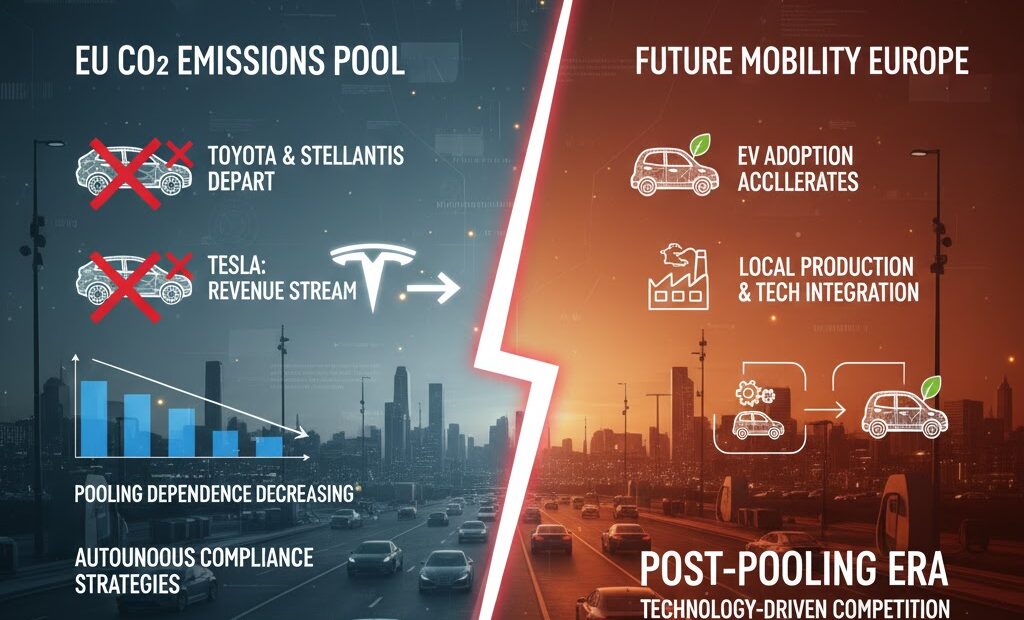
2026年3月現在、欧州市場において長年続いていた「テスラ主導のCO2プール」に大きな動きがありました。主要パートナーであったトヨタとステランティスが、2026年のプール協定から離脱することが報告されています。
1. CO2プール制度の仕組みと目的
EUの厳しい排出規制を回避するため、自動車メーカーは以下のスキームを活用しています。
- プールの組成: 複数のメーカーが車両群を統合し、全体の平均CO2排出量を算出。
- 相殺効果: EV販売比率が高いメーカー(テスラなど)の「排出枠の余剰」を、排出量の多いメーカーが購入することで、平均値を目標内に抑える。
- メリット: 各社は、単独で目標未達となった場合に課される巨額のEU罰金を回避でき、プール提供者(テスラ)には収益が生まれる。
2. 今回の離脱の背景と各社の戦略
各社からの公式発表はありませんが、アナリスト等の分析に基づくと、以下の戦略的判断が推測されます。
| メーカー | 離脱の背景・見通し |
| トヨタ | ハイブリッド車の普及により、自力でCO2目標を達成できる目処が立った。新型EV「bZ4X」の販売好調や、小型モデルの拡充でEV比率の向上が見込まれる。 |
| ステランティス | 子会社のリープモーター(Leapmotor)との統合プールを模索。スペイン工場での現地生産を通じたコスト削減と、技術活用による自社EV競争力の強化を目指す。 |
3. 補足:関連情報と市場への影響
- リープモーターの役割: ステランティスは、リープモーターとの協業を強化しています。T03の欧州生産は、中国製EVへの関税回避と、欧州市場での価格競争力確保を両立させる狙いがあります。一方で、ディーゼルエンジンの復活など、欧州規制への対応戦略には不透明な部分も残ります。
- テスラへの影響: テスラにとって、排出権売却収入は過去の業績を下支えする重要な柱でした。今回の離脱により収益源が縮小する可能性があります。テスラ自身も財務報告にて、この収入への依存度が低下していることを認めており、今後はより自律的な収益体制への移行が求められます。
- 確定までの期間: CO2プールの最終的な構成は、その年の12月1日までに確定する必要があります。市場環境の変化や目標達成率の予測次第では、年末までに方針が転換される可能性もゼロではありません。
まとめ
トヨタとステランティスの離脱は、両社が「他社からの排出枠購入」という対症療法から、「自社生産ラインのEV化や効率化による自律的な目標達成」という段階へシフトしつつあることを示唆しています。欧州の規制環境が厳しさを増す中、メーカー各社は「罰金の回避」から「技術的な競争力向上」へと、より直接的な生き残り戦略を加速させています。
出典:https://batteryindustry.net/toyota-and-stellantis-exit-emissions-pooling-agreement-with-tesla/
Toyota and Stellantis to Withdraw from European CO2 Pool: A Turning Point for the Tesla-Led Framework
As of March 2026, there has been a major development in the “Tesla-led CO2 pool” that has persisted in the European market for many years. It is reported that key partners, Toyota and Stellantis, will withdraw from the pool agreement in 2026.
1. Mechanism and Purpose of the CO2 Pool System
To avoid strict EU emission regulations, automakers utilize the following scheme:
- Formation of a Pool: Multiple manufacturers consolidate their vehicle fleets to calculate an overall average CO2 emission level.
- Offsetting Effect: Manufacturers with high EV sales ratios (such as Tesla) provide “surplus emission credits” to manufacturers with higher emissions, allowing them to keep their average within the regulatory targets.
- Benefits: Companies can avoid the massive EU fines that would otherwise be imposed for missing individual targets, while pool providers (Tesla) generate significant revenue.
2. Background of the Withdrawal and Corporate Strategies
While there has been no official announcement from the companies, based on analysis from experts, the following strategic decisions can be inferred:
- Toyota: With the widespread adoption of hybrid vehicles, the company sees a clear path to achieving its CO2 targets on its own. The strong sales of the new bZ4X and the expansion of its lineup with smaller models are expected to increase its overall EV ratio.
- Stellantis: The company is exploring forming a separate pool with its subsidiary, Leapmotor. It aims to reduce costs through local production at its Spanish plant and strengthen the competitiveness of its own EVs by leveraging Leapmotor’s technology.
3. Supplementary Information and Market Impact
- The Role of Leapmotor: Stellantis is strengthening its collaboration with Leapmotor. The European production of the T03 is aimed at avoiding tariffs on Chinese-made EVs while maintaining price competitiveness in the European market. However, there remain uncertainties in its strategy for complying with European regulations, such as the revival of diesel engines.
- Impact on Tesla: For Tesla, revenue from the sale of emission credits has been a major pillar supporting its past financial performance. This withdrawal may lead to a reduction in its revenue stream. Tesla has acknowledged in its financial reports that its reliance on this income is decreasing, and it will be required to transition toward a more autonomous revenue structure in the future.
- Timeline for Finalization: The final composition of CO2 pools must be confirmed by December 1 of each year. Depending on changes in market conditions and updated forecasts for target achievement, there remains a possibility that these policies could be revised before the end of the year.
Summary
The withdrawal of Toyota and Stellantis suggests that both companies are shifting from “symptomatic treatment” through the purchase of emission credits from other companies toward a stage of “achieving targets autonomously” through the electrification and increased efficiency of their own production lines. As the regulatory environment in Europe becomes increasingly stringent, automakers are accelerating more direct survival strategies—moving away from merely “avoiding fines” and toward “enhancing technological competitiveness.”

コメント