持続可能なモビリティ社会の実現に向け、リチウムイオン電池の需要が世界的に急増しています。これに伴い、リチウム、コバルト、ニッケルといった重要鉱物の確保と、使用済み製品からの効率的な回収が喫緊の課題となっています。
ドイツのフラウンホーファー製造技術・先端材料研究所(IFAM)が開発を進めている「電気化学的抽出プロセス」は、従来の環境負荷が高い手法に代わる、高効率かつ低炭素なリサイクル技術として注目されています。以下に、その技術内容と関連情報をまとめました。
1. 技術の概要とメカニズム
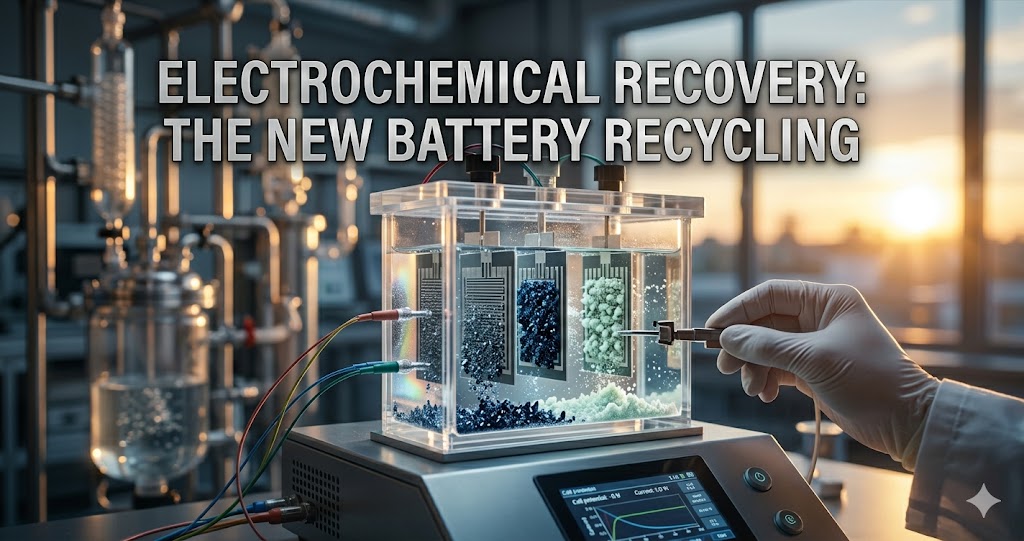
フラウンホーファーIFAMが開発した新技術は、電池リサイクル工程で発生する「処理水」から、特定の金属イオンを直接回収する電気化学的手法です。
- 選択的電極技術: スクリーン印刷技術を用いて製造された特殊な電極を反応器内に設置します。この電極は特定のイオンを選択的に吸着・貯蔵する特性を持っています。
- プロセスの流れ:
- リサイクル工程の廃水を反応器へ供給。
- 電極がリチウム、コバルト、ニッケルなどのイオンを分離。
- 最終的に、高純度の粉末として原材料を回収。
- 精製された水はプロセス内で再利用。
- 多段階回収: 反応器を直列に配置することで、一連のシステム内で異なる種類の希少原材料を順次回収することが可能です。
2. 従来手法(乾式・湿式)との比較
現在主流となっているリサイクル手法と比較して、本技術は環境面と経済面で大きな優位性を持っています。
| 項目 | 乾式製錬 / 湿式製錬 | 電気化学プロセス (MeGaBat) |
| エネルギー消費 | 極めて高い (高温処理等) | 低い |
| 化学物質の使用 | 強酸、強塩基を大量使用 | 不要 |
| CO2排出量 | 多い | 少ない |
| 効率性 | 課題がある | 従来比で30-40%向上と推定 |
| コスト | 高い | 低い (費用対効果に優れる) |
3. プロジェクトの背景と重要性
- 輸入依存の脱却: ドイツのリチウム輸入額は、2013年から2023年の10年間で約40倍(210億ユーロ)に達しています。域内での回収技術確立は、経済安全保障に直結します。
- 規制への対応: 欧州連合 (EU) の「欧州電池規則」により、炭素排出量の開示や、新製品へのリサイクル材料の使用義務が強化されています。高純度な回収技術は、メーカーにとって必須のソリューションとなります。
- MeGaBatプロジェクト: ドイツ連邦教育研究省 (BMBF) の支援を受け、2028年末まで研究が継続される予定です。
4. 今後の展望と応用範囲
研究チームは、実験室レベルでの試験に成功しており、現在は大規模なパイロットプラントの開発を進めています。
- 希土類元素 (レアアース) への応用: 電池だけでなく、電子廃棄物 (E-waste) からの希土類元素抽出への適用が期待されています。現在は100%輸入に頼っている資源の自給率向上を目指します。
- 多角的な展開:
- 海水淡水化プロセスへの応用。
- 病院排水に含まれる微量有害物質や特定成分の除去・処理。
- 対外発表: ハノーバーメッセにおいて、本プロセスのモデルが公開される予定です。
Next-Generation Battery Recycling via Electrochemical Processes: High-Purity Recovery of Lithium and Cobalt
Demand for lithium-ion batteries is surging globally as we move toward a sustainable mobility society. Consequently, securing critical minerals such as lithium, cobalt, and nickel, along with developing efficient recovery methods from end-of-life products, has become an urgent priority.
The “Electrochemical Extraction Process” being developed by the Fraunhofer Institute for Manufacturing Technology and Advanced Materials (IFAM) in Germany is gaining attention as a high-efficiency, low-carbon recycling technology to replace conventional methods with high environmental impacts. Below is a summary of the technical details and related information.
1. Technology Overview and Mechanism
The new technology developed by Fraunhofer IFAM is an electrochemical method that directly recovers specific metal ions from the “process water” generated during the battery recycling steps.
- Selective Electrode Technology: Special electrodes manufactured using screen printing technology are installed in a reactor. These electrodes possess specific properties that allow them to selectively adsorb and store target ions.
- Process Flow:
- Waste water from the recycling process is fed into the reactor.
- The electrodes separate ions such as Li, Co, and Ni.
- Raw materials are ultimately recovered as high-purity powders.
- Purified water is reused within the process.
- Multi-Stage Recovery: By arranging reactors in series, it is possible to sequentially recover different types of rare raw materials within a single system.
2. Comparison with Conventional Methods (Pyrometallurgy / Hydrometallurgy)
Compared to currently dominant recycling methods, this technology offers significant environmental and economic advantages.
| Item | Pyrometallurgy / Hydrometallurgy | Electrochemical Process (MeGaBat) |
| Energy Consumption | Extremely high (high-temp processing, etc.) | Low |
| Chemical Usage | Heavy use of strong acids and bases | Not required |
| CO2 Emissions | High | Low |
| Efficiency | Faces significant challenges | Estimated 30-40% improvement over conventional methods |
| Cost | High | Low (Excellent cost-effectiveness) |
3. Project Background and Importance
- Breaking Import Dependency: Germany’s lithium import value reached 21 billion Euro in 2023, approximately a 40-fold increase from 2013. Establishing recovery technology within the region is directly linked to economic security.
- Regulatory Compliance: The European Union (EU) Battery Regulation has strengthened requirements for carbon footprint disclosure and the mandatory use of recycled materials in new products. High-purity recovery technology is an essential solution for manufacturers.
- MeGaBat Project: Supported by the German Federal Ministry of Education and Research (BMBF), the research is scheduled to continue until the end of 2028.
4. Future Outlook and Applications
The research team has already succeeded in laboratory-scale testing and is currently developing a large-scale pilot plant.
- Application to Rare Earth Elements (REE): The technology is expected to be applied not only to batteries but also to the extraction of rare earth elements from electronic waste (E-waste). This aims to improve self-sufficiency for resources that are currently 100% dependent on imports.
- Diversified Deployment:
- Application to seawater desalination processes.
- Removal and treatment of trace hazardous substances or specific components in hospital wastewater.
- External Presentation: A model of this process is scheduled to be showcased at Hannover Messe.


コメント