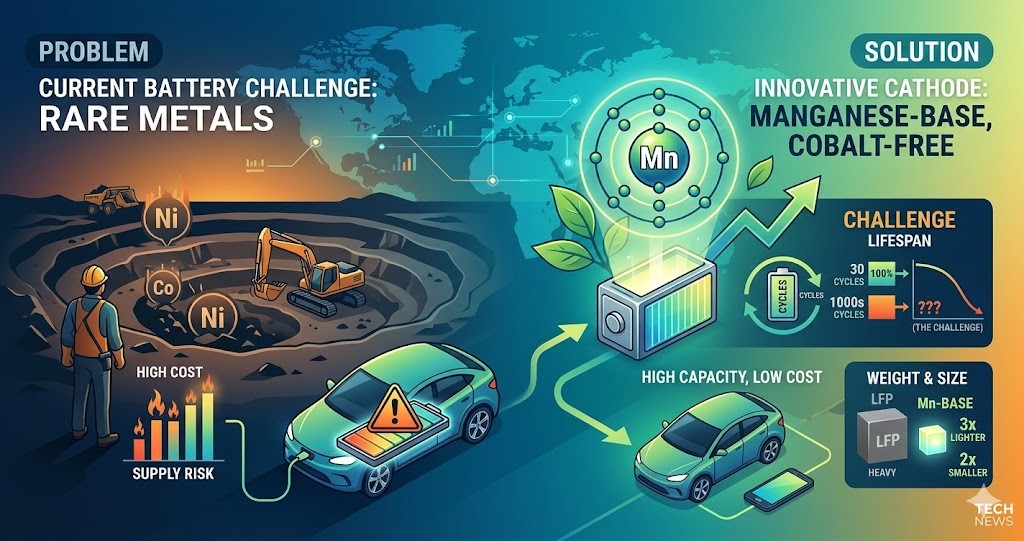
電気自動車(EV)やスマートフォン、蓄電池の普及に伴い、高性能で安価なリチウムイオン電池の需要が世界中で爆発的に高まっています。しかし、従来の電池には高価なレアメタルが必要不可欠であり、コストや供給安定性の面で大きな課題を抱えていました。 このような背景の中、カネカが開発を進めている「コバルトフリー」かつ「マンガンベース」の革新的な新正極材について、その特徴と課題、将来性をまとめました。
カネカによる次世代正極材の開発概要とまとめ
1. 開発の背景と目的(レアメタルからの脱却)
- 従来の課題: これまでのリチウムイオン電池(NMC811など)は、コバルトやニッケルといった高価なレアメタルが必要でした。特にコバルトは価格変動が激しく、調達リスクやコスト高の原因となっています。
- カネカの取り組み: 低ニッケル比率で、コバルトを一切使わない「コバルトフリー」の正極材を開発。安価なマンガンをベースにすることで、劇的なコストダウンを狙っています。
2. 驚異的な「放電容量」
カネカが開発中の正極材は、エネルギーを蓄える能力(放電容量)において、既存の主要な電池を大きく上回る数値を叩き出しています。
- NMC811(一般的な三元系電池)比: 約1.3倍
- LFP(リン酸鉄リチウム電池)比: 約1.6倍
3. 最大の技術的ハードル:充放電サイクルの寿命
現在の最大の課題は、電池を繰り返し充放電した際の「寿命(劣化の遅さ)」です。
- 現状の実力: 30回程度の充放電であれば、放電容量維持率はほぼ100%をキープできます。
- 今後の目標: 商業化に向けて、100回、1000回、さらには1万回の充放電を行っても高い維持率を保てるようにする必要があります。カネカは今後、「構造技術」と「材料設計技術」を駆使して開発を進める方針です。
4. 完成時のメリットと将来の展望
この正極材が完成し、実際にリチウムイオン電池が作製された場合、現在市場を席巻している中国製のLFP電池と比較して、圧倒的な軽量・小型化が可能になります。
- 重量: 約3分の1に軽量化
- サイズ: 約半分に小型化
- 開発目ど: カネカは早ければ2、3年のうち(2028年から2029年頃)に完成のめどを立てたいとしています。
💡 関連情報(市場の背景と補足)
今回のニュースをより深く理解するための、業界のトレンドと専門用語の解説です。
- NMC811とは: ニッケル(N)、マンガン(M)、コバルト(C)の比率が「8:1:1」の割合で構成された、現在の高性能EVなどで主流の「三元系リチウムイオン電池」の一種です。エネルギー密度が高い反面、コバルトやニッケルを多く使うためコストが高いのが弱点です。
- LFP(リン酸鉄リチウム)電池とは: コバルトやニッケルを使わず、安価な鉄とリンを主成分とした電池です。中国メーカー(BYDやCATLなど)が圧倒的なシェアを誇っています。安全性が高く安価なため普及が進んでいますが、「重くてかさばる(エネルギー密度が低い)」という大きなデメリットがあります。
- カネカの開発がもたらすインパクト: もしカネカのマンガンベースの新正極材が完成すれば、「LFP電池の強みである安さ」と、「三元系電池を凌駕する軽さ・小ささ(高エネルギー密度)」を両立できることになります。特に航続距離と軽さが求められる次世代EVやドローン、モバイル機器の市場において、ゲームチェンジャー(市場の勢力図を塗り替える存在)になる可能性を秘めています。
出典:https://news.yahoo.co.jp/articles/dde1f45edbb03c3dd15f8cd3414fe2422d0fb187
Halving Size and Cutting Weight to One-Third: A Closer Look at Kaneka’s Development of a Next-Generation Cathode Material Outperforming Chinese LFP Batteries
Introduction With the widespread adoption of electric vehicles (EVs), smartphones, and energy storage systems, the global demand for high-performance, affordable lithium-ion batteries is exploding. However, conventional batteries strictly require expensive rare metals, posing major challenges in terms of cost and supply chain stability. Against this background, this report summarizes the features, challenges, and future prospects of an innovative “cobalt-free” and “manganese-based” new cathode material currently being developed by Kaneka.
Overview and Summary of Next-Generation Cathode Material Development by Kaneka
1. Background and Objectives of Development (Moving Away from Rare Metals)
- Conventional Challenges: Existing lithium-ion batteries, such as NMC811, require expensive rare metals like cobalt and nickel. Cobalt, in particular, suffers from volatile price fluctuations, causing procurement risks and high costs.
- Kaneka’s Initiative: Kaneka is developing a “cobalt-free” cathode material with a low nickel ratio. By using affordable manganese as the base, the company aims for a dramatic reduction in costs.
2. Incredible “Discharge Capacity” The cathode material under development by Kaneka delivers figures that significantly outperform major existing batteries in terms of discharge capacity (the ability to store energy).
- Compared to NMC811 (General Ternary Battery): Approximately 1.3 times higher
- Compared to LFP (Lithium Iron Phosphate Battery): Approximately 1.6 times higher
3. The Biggest Technical Hurdle: Charge-Discharge Cycle Life The biggest current challenge for Kaneka is the “life cycle” (slowness of degradation) when the battery is repeatedly charged and discharged.
- Current Capability: For about 30 charge-discharge cycles, it can maintain a discharge capacity retention rate of nearly 100%.
- Future Goals: For commercialization, Kaneka needs to maintain a high retention rate even after 100, 1000, or even 10,000 charge-discharge cycles. The company plans to advance development by utilizing structural technology and material design technology.
4. Benefits upon Completion and Future Outlook Once Kaneka finalizes this cathode material and uses it to manufacture actual lithium-ion batteries, it could achieve overwhelming weight and size reductions compared to Chinese-made LFP batteries, which currently dominate the market.
- Weight: Reduced to about one-third
- Size: Halved
- Development Timeline: Kaneka aims to establish a clear path toward completion within the next 2 to 3 years (around 2028 to 2029).
💡 Related Information (Market Background and Supplementary Notes)
An explanation of industry trends and technical terms to help deepen your understanding of this news.
- What is NMC811? It is a type of “ternary lithium-ion battery” currently mainstream in high-performance EVs, composed of nickel (N), manganese (M), and cobalt (C) in a ratio of 8:1:1. While it offers high energy density, its weakness lies in high costs due to the heavy use of cobalt and nickel.
- What is an LFP (Lithium Iron Phosphate) Battery? This battery does not use cobalt or nickel, instead relying on cheap iron and phosphate as its main ingredients. Chinese manufacturers (such as BYD and CATL) hold an overwhelming market share. Although it is highly safe, affordable, and growing in popularity, its major drawback is that it is heavy and bulky (low energy density).
- The Potential Impact of Kaneka’s Development: If Kaneka successfully completes this manganese-based new cathode material, it will combine the low cost of LFP batteries with a lightness and compactness (high energy density) that surpasses ternary batteries. It holds the potential to become a game-changer (an entity that rewrites the market landscape), particularly in markets for next-generation EVs, drones, and mobile devices where driving range and light weight are critical.

コメント