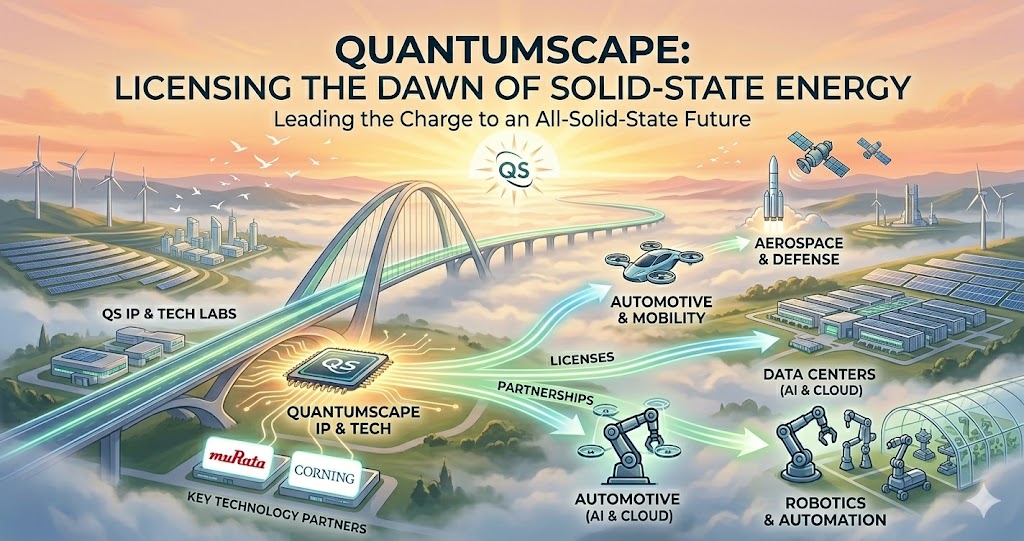
QuantumScape社のCEO、シヴァ・シヴァラム博士は、自社を「製造メーカー」ではなく「技術ライセンサー(知的財産の提供者)」と位置づける、新しいビジネスモデルの詳細を発表しました。
1. パートナーシップ主導のライセンスモデル
- ファブレス戦略: 自社で大規模な工場を持つのではなく、半導体業界(NvidiaやARMなど)のような技術供与型モデルを採用。開発・実証・普及に特化します。
- 主要パートナー: セラミックセパレーターの製造において、日本の村田製作所および米国のコーニングと提携。
- 製造ライン「イーグルライン」: ライセンス供与先へ移転可能な、拡張性の高い製造プロセス(装置・ソフトウェア含む)を2026年2月に公開済み。
2. 市場ターゲットの拡大
- 自動車分野: 依然として中核事業であり、欧米日のトップ10車メーカーと提携。2026年にはドゥカティの電動バイク「V21L」での実地試験を予定。
- 非自動車分野(新領域): * 防衛・ドローン: 中国産グラファイト(黒鉛)に依存しない「グラファイトフリー設計」により、サプライチェーンの安全性を強調。
- データセンター・ロボット: 従来の液系リチウムイオン電池よりも安全性が高いため、AIデータセンターなどの高リスク環境への導入を狙う。
3. 技術的優位性とロードマップ
- S字曲線の転換: 従来のリチウムイオン電池は進化の限界(S字曲線の頂点)に達したが、固体電池はこれから急成長する段階にあると主張。
- 次世代開発: 2026年に、さらなる大容量化や正極材の革新を含む「次世代ロードマップ」を発表予定。
関連情報:背景と技術のポイント
固体電池(Solid-State Battery / SSB)とは
従来のリチウムイオン電池が「可燃性の電解液」を使用するのに対し、すべてを「固体の電解質」に置き換えた電池です。
- メリット: 燃えにくいため安全性が極めて高く、エネルギー密度が向上するためEVの航続距離を大幅に延ばせます。
- QuantumScapeの独自性: 「リチウム金属」を負極に使用し、さらに負極材そのものを排除する「アノードレス(グラファイトフリー)」構造により、圧倒的な小型・軽量化を目指しています。
なぜ「ライセンスモデル」なのか
電池製造は数千億円規模の巨額投資が必要な「資本集約型」の産業です。新興企業が自力でテスラやBYDのような巨大工場を建てるのはリスクが高いため、技術(IP)を切り売りし、既存の製造巨人(村田製作所など)と組むことで、早期の普及と収益化を狙う戦略です。
経済安全保障とグラファイト(黒鉛)
現在、リチウムイオン電池の負極に使われるグラファイトの多くは中国が生産シェアを握っています。QuantumScapeの「グラファイトフリー」技術は、地政学的リスクを避けたい欧米の防衛・航空宇宙産業にとって、性能以上の戦略的価値を持っています。
データセンターでの需要
AIの爆発的普及により、データセンターの消費電力とバックアップ電源の重要性が急増しています。これまでは火災リスクから大容量リチウムイオン電池の設置が敬遠されるケースもありましたが、安全な固体電池はこの巨大市場のゲームチェンジャーになる可能性があります。
From Self-Production to IP Business: QuantumScape Overhauls Commercialization Strategy for Solid-State Batteries
Dr. Siva Sivaram, CEO of QuantumScape, has announced details of a new business model that positions the company not as a “manufacturer,” but as a “technology licensor” (Intellectual Property provider).
1. Partnership-Driven Licensing Model
- Fabless Strategy: Rather than building large-scale in-house factories, the company is adopting a technology-sharing model similar to the semiconductor industry (e.g., Nvidia or ARM). Focus will be on development, validation, and deployment.
- Key Partners: Partnerships have been established with Japan’s Murata Manufacturing and the US-based Corning for the production of ceramic separators.
- “Eagle Line” Production Line: A scalable manufacturing process, including equipment and software that can be transferred to licensees, was publicly unveiled in February 2026.
2. Expansion of Market Targets
- Automotive Sector: Remains the core business, with partnerships involving the top 10 global automakers across Europe, North America, and Japan. Field testing with the Ducati “V21L” electric racing bike is scheduled for 2026.
- Non-Automotive Sectors (New Frontiers):
- Defense and Drones: Emphasis on supply chain security through a “graphite-free design” that does not rely on Chinese-sourced graphite (black lead).
- Data Centers and Robotics: Targeting high-risk environments like AI data centers, where solid-state batteries offer superior safety over conventional liquid-electrolyte lithium-ion batteries.
3. Technical Advantage and Roadmap
- Shifting the S-Curve: The company asserts that while conventional lithium-ion batteries have reached their evolutionary limit (the top of the S-curve), solid-state batteries are entering a stage of rapid growth.
- Next-Generation Development: A “Next-Generation Roadmap” is scheduled for release in 2026, featuring higher energy capacities and cathode chemistry innovations.
Related Information: Background and Technical Key Points
What is a Solid-State Battery (SSB)?
Unlike conventional lithium-ion batteries that use a “flammable liquid electrolyte,” these batteries replace all components with a “solid electrolyte.”
- Benefits: They are extremely safe due to low flammability and can significantly extend the range of EVs by increasing energy density.
- QuantumScape’s Uniqueness: By using “lithium metal” for the anode and utilizing an “anode-less (graphite-free)” structure that eliminates the anode material itself, the company aims for dramatic size and weight reductions.
Why a “Licensing Model”?
Battery manufacturing is a “capital-intensive” industry requiring investments in the hundreds of billions of yen. For a startup, building massive factories like Tesla or BYD carries high risk. By selling technology (IP) and partnering with existing manufacturing giants like Murata, the company aims for faster adoption and monetization.
Economic Security and Graphite
Currently, China holds a dominant share of the global production of graphite used in lithium-ion battery anodes. QuantumScape’s “graphite-free” technology holds strategic value beyond performance for Western defense and aerospace industries seeking to mitigate geopolitical risks.
Demand in Data Centers
With the explosive growth of AI, power consumption and the importance of backup power in data centers are surging. Until now, large-capacity lithium-ion batteries were often avoided due to fire risks, but safe solid-state batteries could be a game-changer for this massive market.
コメント