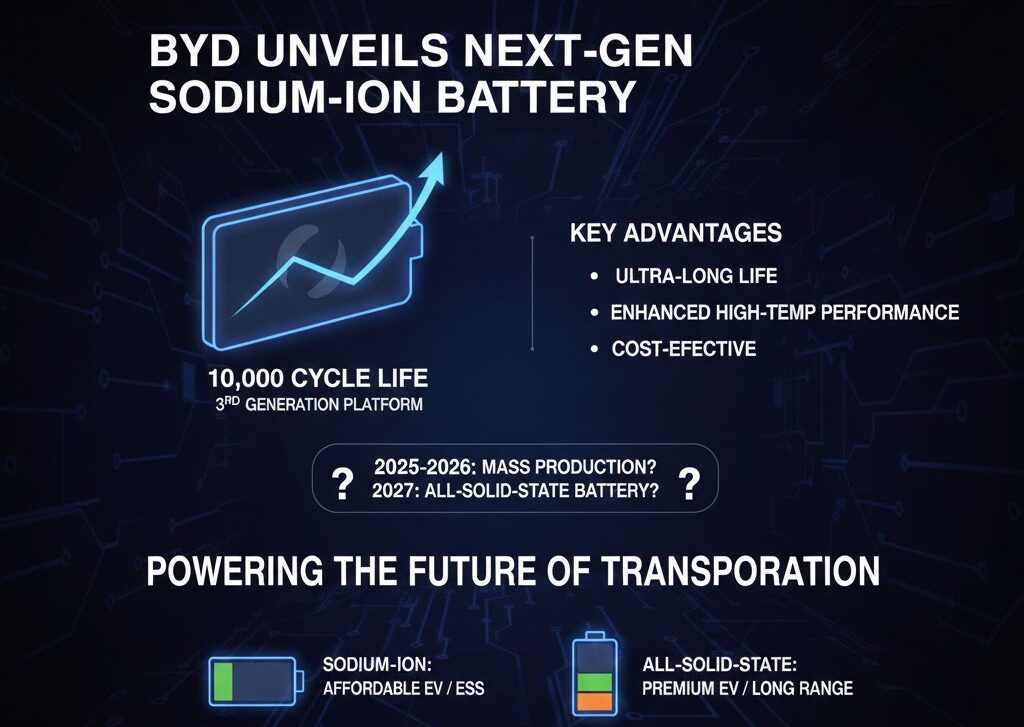
中国のEV・電池大手BYDは、最大10,000回のサイクル寿命(充放電回数)を実現した第3世代のナトリウムイオン電池を開発したと発表しました。量産時期については、市場と顧客の需要を見極めて決定する方針です。
主なトピック
- 長寿命化の実現: 一般的なEV用LFP(リン酸鉄リチウム)電池の寿命が2,000から3,000サイクルであるのに対し、エネルギー貯蔵用電池に匹敵する10,000サイクルを達成。
- 技術的進歩: 第3世代プラットフォームに到達。新材料設計により、ナトリウム電池の弱点であったナトリウム沈殿問題や高温時の課題を克服しました。
- 全固体電池への展望: 硫化物系全固体電池についても言及。2027年までの小規模生産開始を目指し、航続距離と急速充電の飛躍的向上を狙います。
関連情報と背景解説
1. なぜ今「ナトリウムイオン電池」なのか
リチウムイオン電池の主原料であるリチウムは価格変動が激しく、供給リスクが懸念されています。
- コストと資源: ナトリウム(塩の主成分)は地球上に豊富に存在し、安価です。リチウムを代替・補完することで、安価な小型EVの普及を後押しします。
- 低温特性: ナトリウム電池は氷点下などの低温環境でも性能が落ちにくいという特徴があり、寒冷地での利用に適しています。
2. 競合CATLとの激しい開発競争
世界最大の電池メーカーCATL(寧徳時代)は、すでに具体的な実用化フェーズに入っています。
- CATLの動向: 2026年半ばに長安汽車と共同で、ナトリウム電池搭載の乗用車を発売予定。
- 性能比較: CATLの「Naxtra」電池はエネルギー密度175Wh/kgを誇り、既存のLFP電池に近い水準まで性能を引き上げています。BYDは今回「サイクル寿命」という耐久性の面で強力な対抗軸を打ち出した形です。
3. 次世代電池の三頭政治(LFP・ナトリウム・全固体)
電池市場は用途に応じて3つの勢力に分かれつつあります。
- LFP電池: 現在の主流。コストと安全性のバランスに優れる。
- ナトリウム電池: 「安さ」と「資源確保」が武器。小型車やエネルギー貯蔵システム(ESS)向け。
- 全固体電池: 「究極の性能」。高級車や長距離走行向け。BYDは硫化物系を本命視しています。
出典:https://cnevpost.com/2026/02/09/byd-has-developed-sodium-batteries-cycle-life-10000/
BYD Announces Third-Generation Sodium-Ion Battery with 10,000-Cycle Life
BYD, the Chinese EV and battery giant, has announced the development of a third-generation sodium-ion battery that achieves a cycle life (charge-discharge cycles) of up to 10,000. The company plans to determine the timing of mass production based on market conditions and customer demand.
Key Topics
- Extended Longevity: While typical LFP (lithium iron phosphate) batteries for EVs have a lifespan of 2,000 to 3,000 cycles, this new battery achieves 10,000 cycles, comparable to batteries used for energy storage systems.
- Technical Breakthroughs: Reaching a third-generation platform, BYD has overcome common sodium-ion issues, such as sodium precipitation and high-temperature challenges, through innovative material design.
- Solid-State Battery Outlook: The company also discussed sulfide-based solid-state batteries, aiming for small-scale production by 2027 to achieve dramatic improvements in driving range and fast-charging capabilities.
Related Information and Context
1. Why Sodium-Ion Batteries Now?
Lithium, the primary raw material for lithium-ion batteries, suffers from volatile pricing and supply chain risks.
- Cost and Resources: Sodium (the main component of salt) is abundant and inexpensive. By replacing or supplementing lithium, sodium-ion batteries will help drive the adoption of affordable, small EVs.
- Low-Temperature Performance: Sodium-ion batteries maintain their performance better in sub-zero temperatures, making them highly suitable for use in cold regions.
2. Intense Competition with Rival CATL
CATL, the world’s largest battery manufacturer, has already entered a concrete commercialization phase.
- CATL’s Progress: In partnership with Changan Automobile, CATL plans to launch a passenger vehicle equipped with sodium-ion batteries in mid-2026.
- Performance Comparison: CATL’s “Naxtra” battery boasts an energy density of 175Wh/kg, bringing it close to the level of existing LFP batteries. BYD is positioning itself as a strong competitor by highlighting durability through “cycle life.”
3. The Three Pillars of Next-Gen Batteries (LFP, Sodium, Solid-State)
The battery market is diverging into three main categories based on application:
- LFP Batteries: The current mainstream, offering a superior balance of cost and safety.
- Sodium-Ion Batteries: Armed with low cost and resource security, these are aimed at small vehicles and energy storage systems (ESS).
- Solid-State Batteries: Focused on “ultimate performance” for luxury vehicles and long-range travel. BYD views sulfide-based technology as the most promising direction.
コメント