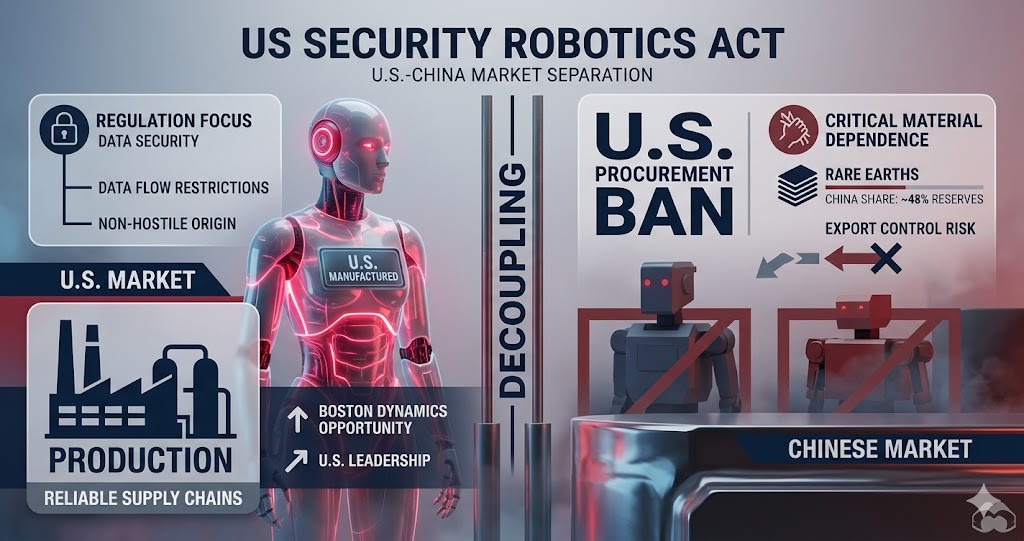
米国は国家安全保障を理由に、中国製ロボットを連邦政府の調達から排除する動きを強めています。この政策転換は、世界のロボット産業の競争構造を再編し、現代自動車(ヒュンダイ)にとって大きな好機となる一方、サプライチェーンにおける中国依存の課題も浮き彫りにしています。
1. 米国安全保障ロボット法案(U.S. Security Robotics Act)の概要
- 法案の提出: 2026年3月26日、米上院にて超党派の議員により提出。
- 主な内容: 中国など「敵対的」とみなす国で製造された無人地上車両やロボットシステムを、連邦資金で購入することを禁止。
- 対象範囲: 自律型巡回ロボット、物流ロボット、人型ロボット(ヒューマノイド)など幅広く、データ収集や制御に不可欠なカメラやセンサーなどの部品も事実上の対象。
- 施行時期: 2027年初頭に施行、2027年末から既存設備の運用制限が開始される見通し。
2. 現代自動車とボストン・ダイナミクスの戦略的チャンス
この規制により、米国内の公共市場から中国の競合他社が排除されるため、現代自動車傘下のボストン・ダイナミクス(Boston Dynamics)にとって有利な環境が整いつつあります。
- 米国内での生産拡大: 2028年までに米国に年間30,000台規模の人型ロボット生産工場を設立する計画。
- 独自サプライチェーンの構築: 現代モービスと連携し、アクチュエーターやグリッパーなどの主要部品を米国内または信頼できる提携国で製造する体制を急ピッチで進めています。
- 政策への関与: ボストン・ダイナミクスは米国のロボット政策策定にも深く関わっており、2027年3月に発表予定のロボット政策ロードマップにおいて、米国のリーダーシップ確保に向けた戦略設定に貢献しています。
3. 【関連情報】ロボット産業におけるデカップリングの限界とリスク
現代自動車にとって追い風となる一方で、専門家は「中国との完全な分離」には高い障壁があると指摘しています。
- レアアースへの深い依存: ロボットの「筋肉」となるモーターには強力な磁石が必要ですが、その原料となるレアアース(希土類)の埋蔵量の約48%を中国が占めています。さらに、精製プロセスに必要な化学物質の輸出に至っては中国が約85%のシェアを握っており、中国抜きでの安価な生産は極めて困難です。
- 軍事・EV分野との類似性: 米国は既に2027年から防衛分野での中国製レアアース磁石の使用禁止を検討しています。この動きがロボット分野にも波及した場合、テスラの「オプティマス」など、中国製部品への依存度が高い企業は価格競争力の大幅な低下を免れません。
- データセキュリティの重要性: 今回の規制の核心は「物理的なハードウェア」以上に「データの流れ」にあります。自律走行ロボットが公共インフラ内を移動して収集するデータが中国に流出することを、米国は最大の安全保障リスクとみなしています。
4. まとめと今後の焦点
米国の新法案は、ハードウェアの製造能力だけでなく、「信頼できるサプライチェーン」を持つ企業が市場を制することを意味しています。
現代自動車は、韓国国内の部品サプライヤーネットワークと、米国での製造拠点を組み合わせることで「非中国サプライチェーン」の構築を急いでいます。しかし、上流工程であるレアアース材料の確保において、いかに中国以外の代替ルートを構築できるかが、最終的なコスト競争力と事業継続の鍵となるでしょう。
今後のポイント: 2027年3月に発表される「ロボット政策最終ロードマップ」において、材料レベルの規制がどこまで厳格化されるかが、業界全体の最大の注目点となります。
出典:https://www.koreaherald.com/article/10710891
Tailwinds for Hyundai: U.S. Robotics Bill to Exclude Chinese Rivals and Boost Boston Dynamics
The United States is intensifying efforts to exclude Chinese-made robots from federal procurement, citing national security concerns. While this policy shift is restructuring the global robotics competitive landscape and creating a major opportunity for Hyundai Motor Group, it also highlights the significant challenges of China-dependency within the supply chain.
1. Overview of the U.S. Security Robotics Act
- Introduction of the Bill: Filed on March 26, 2026, by bipartisan members of the U.S. Senate.
- Core Content: Prohibits the use of federal funds to purchase unmanned ground vehicles or robotic systems manufactured in countries deemed “adversarial,” such as China.
- Scope: Broadly covers autonomous patrol robots, logistics robots, and humanoids. Components essential for data collection and control, such as cameras and sensors, are also effectively targeted.
- Timeline: Expected to take effect in early 2027, with operational restrictions on existing equipment beginning in late 2027.
2. Strategic Opportunities for Hyundai and Boston Dynamics
With Chinese competitors being squeezed out of the U.S. public market, the environment is becoming increasingly favorable for Hyundai-owned Boston Dynamics.
- U.S. Production Expansion: Plans are underway to establish a humanoid robot production facility in the U.S. by 2028, with an annual capacity of 30,000 units.
- Building an Independent Supply Chain: In collaboration with Hyundai Mobis, the company is rapidly developing a system to manufacture key components—such as actuators and grippers—within the U.S. or through trusted partner nations.
- Policy Engagement: Boston Dynamics is deeply involved in shaping U.S. robotics policy. The company is contributing to strategic goal-setting to ensure U.S. leadership in the “National Robotics Policy Roadmap” scheduled for release in March 2027.
3. Challenges and Risks in Robotics Decoupling
While the situation provides a tailwind for Hyundai, experts warn of high barriers to a “complete separation” from China.
- Deep Reliance on Rare Earths: Motors, the “muscles” of robots, require powerful magnets made from rare earth elements. China holds approximately 48% of global reserves and controls about 85% of the exports of chemicals essential for the refining process, making low-cost production without China extremely difficult.
- Parallels to Military and EV Sectors: The U.S. is already considering a ban on Chinese-made rare earth magnets in defense platforms starting in 2027. If this extends to robotics, companies heavily reliant on Chinese components, such as Tesla with its “Optimus,” could face a significant loss in price competitiveness.
- Criticality of Data Security: The core of these regulations lies in “data flow” rather than just physical hardware. The U.S. views the potential leakage to China of data collected by autonomous robots navigating public infrastructure as a top-tier security risk.
4. Summary and Future Focus
The new U.S. legislation implies that the market will be won by companies that possess not just hardware manufacturing capabilities, but a “trusted supply chain.”
Hyundai is racing to build a “non-Chinese supply chain” by combining its network of component suppliers in South Korea with its manufacturing bases in the United States. However, the key to long-term cost competitiveness and business continuity will depend on how effectively they can secure alternative upstream sources for rare earth materials.
Key Watchpoint: The industry’s primary focus will be on the “Final Robotics Policy Roadmap” due in March 2027, which will determine the strictness of regulations at the raw material level.


コメント