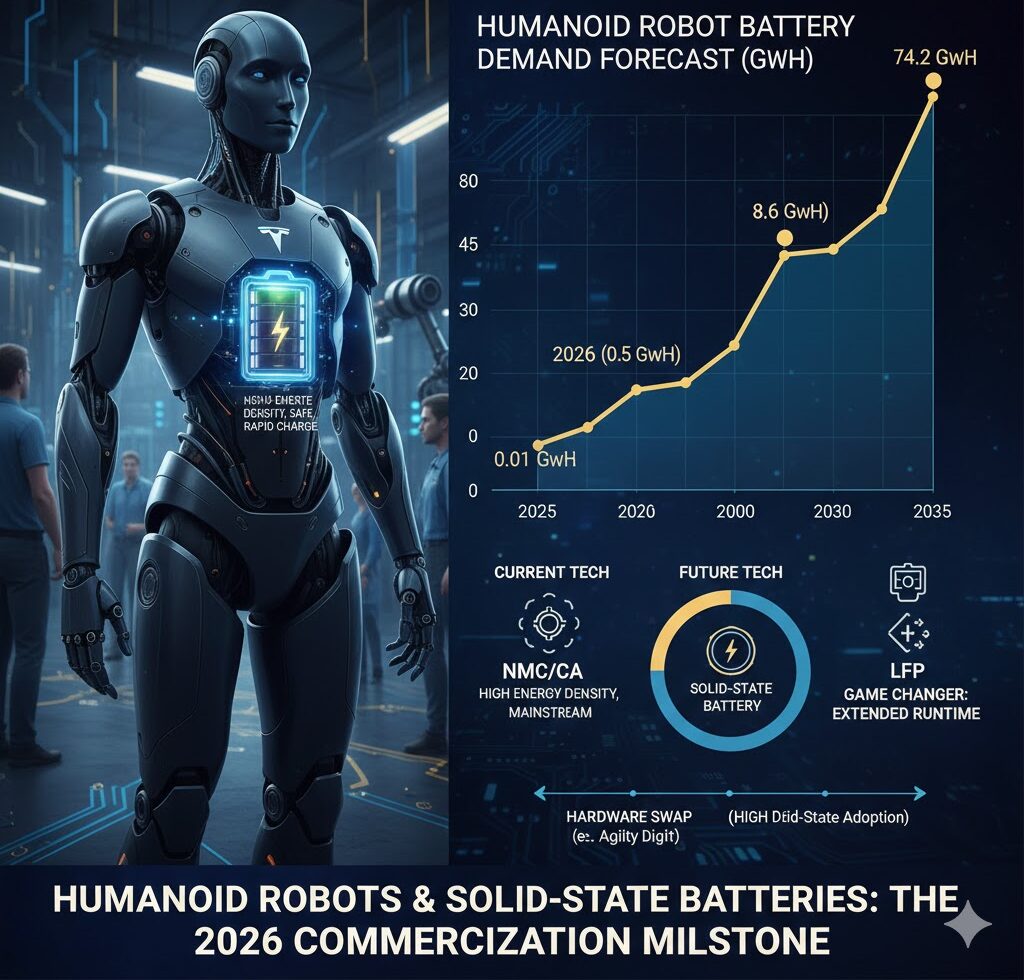
ヒューマノイドロボット市場は2026年に本格的な商業化の節目を迎えると予測されています。それに伴い、エネルギー源となる固体電池の需要は今後10年間で数千倍に膨れ上がる見通しです。
- 2035年の予測需要: 74.2 GWh
- 成長の背景: 長時間の稼働(耐久性)と高負荷動作への対応が不可欠となり、エネルギー密度の高い固体電池が主流のソリューションになると期待されています。
需要推移の予測(単位: GWh)
| 年 | 需要量 (GWh) | 備考 |
| 2025 | 0.01 | 市場立ち上がり期 |
| 2026 (予) | 0.05 | 世界出荷台数 5万台超を見込む |
| 2030 (予) | 8.6 | 技術の成熟と普及 |
| 2035 (予) | 74.2 | 爆発的な需要拡大 |
現在の主要なバッテリー技術と課題
現在、ロボット業界では用途に合わせて以下のリチウム電池が使い分けられています。
- 高ニッケル三元系 (NMC / NCA):高いエネルギー密度を持ち、現在のロボット工学における主流。TeslaのOptimus Gen2(2.3 kWh)などに採用。
- リン酸鉄リチウム (LFP):コスト優位性があるがエネルギー密度は低い。会話型ロボットなど、高い耐久性を求めないモデルに使用。
- 固体電池 (Solid-State Battery):次世代の本命。XpengのIronやEngine AI T800などが先行導入しており、駆動時間を大幅に延ばす鍵となります。
稼働時間の延長戦略
現行のロボットは、一般的に2 kWh未満のバッテリーで2から4時間程度の稼働が限界です。これを解消するために2つのアプローチが取られています。
- ハードウェア交換戦略: Agility RoboticsのDigitのように、バッテリーを「プラグアンドプレイ」で交換し、24時間連続稼働を目指す方式。
- 高密度化戦略: 固体電池の採用により、バッテリー自体の容量を増やして1回の充電での稼働時間を延ばす方式。
関連情報の補足:固体電池が期待される理由
固体電池は、従来の液体電解質を固体の電解質に置き換えたものです。ヒューマノイドロボットにおいて以下のメリットがあります。
- 安全性: 液体漏れや発火のリスクが極めて低く、人間と共存する環境に適しています。
- 小型・軽量化: 同じ体積でより多くのエネルギーを蓄えられるため、ロボットの重量バランスやデザインの自由度が向上します。
- 急速充電: 産業利用において、充電によるダウンタイムを短縮できる可能性があります。
今後の見通し: > 現在はまだ商業化の初期段階であり、業界の最優先事項は「活用シーンの特定」です。バッテリーのカスタマイズには不確実性も残りますが、技術の進化とともにロボットの「スタミナ」問題は固体電池によって解決される方向に進んでいます。
出典:https://cnevpost.com/2026/01/28/demand-for-solid-state-batteries-humanoid-robots-74-gwh-2035/
Solid-State Battery Demand for Humanoid Robots to Exceed 74 GWh by 2035, Signaling Explosive Growth
The humanoid robot market is predicted to reach a major milestone for full-scale commercialization in 2026. Along with this shift, the demand for solid-state batteries as a power source is expected to increase several thousand times over the next decade.
- Projected Demand in 2035: 74.2 GWh
- Background of Growth: As requirements for long-duration operation (endurance) and high-load tasks become essential, high-energy-density solid-state batteries are expected to become the mainstream solution.
Demand Forecast (Unit: GWh)
| Year | Demand (GWh) | Notes |
| 2025 | 0.01 | Market entry phase |
| 2026 (Est.) | 0.05 | Global shipments expected to exceed 50,000 units |
| 2030 (Est.) | 8.6 | Technology maturation and wider adoption |
| 2035 (Est.) | 74.2 | Explosive demand expansion |
Current Key Battery Technologies and Challenges
The robot industry currently utilizes different types of lithium batteries depending on the application:
- High-Nickel Ternary (NMC / NCA):Mainstream in current robotics due to high energy density. Used in models like Tesla’s Optimus Gen2 (2.3 kWh).
- Lithium Iron Phosphate (LFP):Offers cost advantages but has lower energy density. Primarily used in conversational robots that do not require high endurance.
- Solid-State Battery:The next-generation frontrunner. Early adopters like Xpeng’s Iron and Engine AI’s T800 use this technology, which is key to significantly extending operating time.
Strategies for Extending Operating Time
Current robots are generally limited to 2 to 4 hours of operation with batteries under 2 kWh. Two main approaches are being taken to solve this:
- Hardware Swapping Strategy: Systems like Agility Robotics’ Digit use “plug-and-play” battery swapping to aim for 24-hour continuous operation.
- High-Density Strategy: Adopting solid-state batteries to increase the battery capacity itself, extending the operating time per charge.
Why Solid-State Batteries are Expected to Lead
Solid-state batteries replace conventional liquid electrolytes with solid electrolytes. They offer several advantages for humanoid robots:
- Safety: Extremely low risk of leakage or fire, making them suitable for environments where robots coexist with humans.
- Miniaturization and Lightweighting: Since they can store more energy in the same volume, they improve the weight balance and design flexibility of the robot.
- Fast Charging: Potential to reduce downtime during industrial use through quicker charging cycles.
Future Outlook
The industry is still in the early stages of commercialization, with the primary focus being the identification of practical use cases. While uncertainties remain regarding the development of customized batteries, the “stamina” issue of humanoid robots is steadily moving toward a solution through the evolution of solid-state battery technology.
コメント