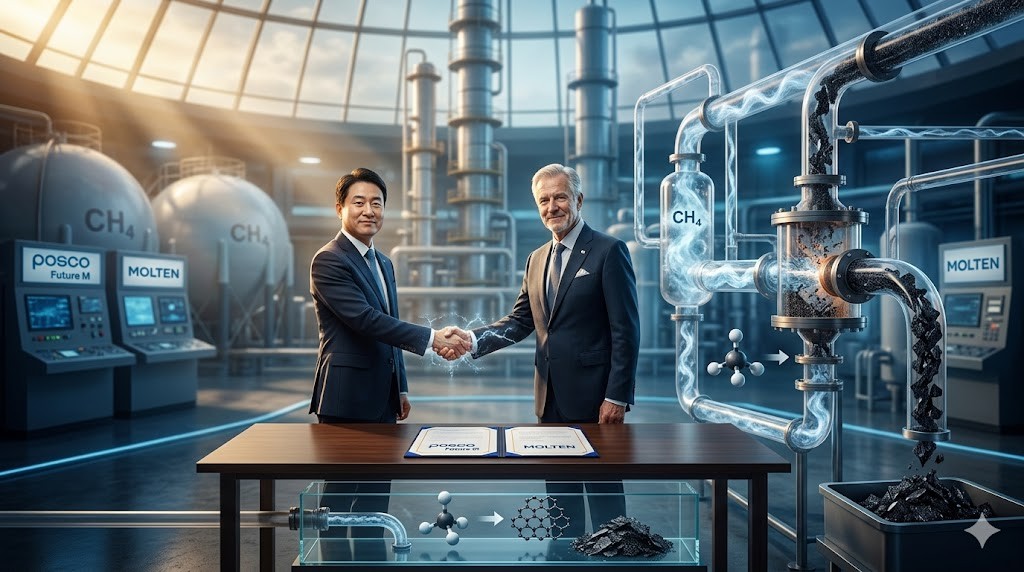
車載電池の負極材市場において、天然黒鉛の供給網は長らく中国に依存してきました。こうした中、韓国のPOSCO Future M(ポスコフューチャーM)は、米国のスタートアップ企業Molten(モルテン)と提携し、「採掘しない黒鉛」の共同開発に乗り出しました。
このプロジェクトは、単なる原材料の確保にとどまりません。メタンガスから黒鉛を抽出する過程で生じる「水素」を鉄鋼製造に活用するという、ポスコグループ全体のカーボンニュートラル戦略に直結した画期的な取り組みです。
- POSCO Future M:メタンガスを用いた天然黒鉛負極材の開発
- 関連情報:負極材市場の背景と地政学的リスク
- サプライチェーンの垂直統合データ
- POSCO Future M Signs MOU with U.S.-Based Molten — Producing High-Purity Anode Materials from Methane Gas
POSCO Future M:メタンガスを用いた天然黒鉛負極材の開発
ニュースの概要
- 発表日: 2026年3月19日(MOU締結は3月11日)
- 提携先: Molten(米国カリフォルニア州拠点)
- 主な内容: メタン熱分解技術を用いた非採掘型黒鉛の製造および負極材への加工
- 期待される成果: 原材料サプライチェーンの強化、コスト削減、副産物(水素)の活用
提携の仕組みとプロセス
- 黒鉛抽出: Moltenがメタン(CH4)を熱分解し、炭素(黒鉛)と水素(H2)を分離生成。
- 加工: POSCO Future Mの子会社FutureGraphが、抽出された黒鉛を球状黒鉛へ加工。
- 最終製品: 韓国の世宗(Sejong)工場にて、EV向け黒鉛負極材を製造。
従来の採掘型黒鉛に対する優位性
- 高純度: 採掘された天然黒鉛に比べ金属不純物が少なく、精製工程を簡略化できるためコスト競争力が高い。
- 環境負荷の低減: 大規模な鉱山開発を必要とせず、環境破壊のリスクを抑えられる。
- 副産物の相乗効果: 熱分解プロセスで発生する水素を、ポスコの水素還元製鉄(HyREX)や発電事業に転用可能。
関連情報:負極材市場の背景と地政学的リスク
今回の提携の重要性を理解するための背景情報を補足します。
1. 中国による黒鉛輸出規制の影響
2023年末以降、中国政府は黒鉛の輸出管理を強化しています。世界の負極材製造の約7割から9割が中国に依存している現状において、POSCO Future Mが米国企業と組み「非採掘・非中国」の供給網を構築することは、北米や欧州の自動車メーカーにとって極めて魅力的な選択肢となります。
2. 米国インフレ抑制法(IRA)への対応
米国でEV補助金を受けるためには、中国などの「懸念団体(FEOC)」から調達した重要鉱物を使用しないことが求められています。Moltenの技術は米国発であり、かつ採掘を伴わないため、IRAの厳しい要件をクリアしつつ、北米市場でのシェアを拡大する戦略的武器となります。
3. 次世代技術:メタン熱分解(ターコイズ水素)
メタンを熱分解して水素と固体炭素(黒鉛)を得る技術は、二酸化炭素(CO2)を排出しないため「ターコイズ水素」と呼ばれます。今回のプロジェクトは、電池材料の確保と同時に、クリーンなエネルギー転換を実現する一石二鳥のモデルとして注目されています。
サプライチェーンの垂直統合データ
| 負極材の種類 | 主な原材料 | 調達・加工ルート |
| 天然黒鉛(従来型) | 天然黒鉛鉱石 | アフリカ等から調達後、FutureGraphで加工 |
| 黒鉛(新型) | メタンガス | Moltenの熱分解技術により生成 |
| 人工黒鉛 | コークス | POSCOの製鉄工程で発生するコールタール由来 |
POSCO Future M 技術研究所長 ホン・ヨンジュン氏のコメント
「これまでは伝統的な採掘方法に頼ってきましたが、両社の専門知識を組み合わせることで、全く新しいアプローチで重要原料を確保します。これによりサプライチェーンの多様化と差別化された競争優位を獲得できると期待しています。」
出典:https://www.poscofuturem.com/en/pr/view.do?num=1004
POSCO Future M Signs MOU with U.S.-Based Molten — Producing High-Purity Anode Materials from Methane Gas
In the automotive battery anode market, the supply chain for natural graphite has long been dependent on China. In response, South Korea’s POSCO Future M has partnered with the U.S. startup Molten to co-develop “mining-free graphite.”
This project goes beyond merely securing raw materials. It is a groundbreaking initiative directly linked to the POSCO Group’s overall carbon neutrality strategy, as the hydrogen generated during the extraction of graphite from methane gas will be utilized in steel manufacturing.
POSCO Future M: Development of Natural Graphite Anodes Using Methane Gas
News Overview
- Announcement Date: March 19, 2026 (MOU signed on March 11)
- Partner: Molten (Based in California, USA)
- Core Content: Production of non-mined graphite using methane thermal decomposition and processing it into anode materials.
- Expected Results: Strengthening the raw material supply chain, cost reduction, and utilization of hydrogen as a byproduct.
Partnership Mechanism and Process
- Graphite Extraction: Molten thermally decomposes methane (CH4) to separately produce carbon (graphite) and hydrogen (H2).
- Processing: FutureGraph, a subsidiary of POSCO Future M, processes the extracted graphite into spherical graphite.
- Final Product: Graphite anode materials for EVs are manufactured at the Sejong plant in South Korea.
Advantages Over Traditional Mined Graphite
- High Purity: Contains fewer metallic impurities than mined natural graphite, simplifying the refining process and increasing cost competitiveness.
- Reduced Environmental Impact: Eliminates the need for large-scale mining operations, reducing the risk of environmental destruction.
- Synergy from Byproducts: Hydrogen generated during thermal decomposition can be repurposed for POSCO’s hydrogen-based steelmaking (HyREX) and power generation businesses.
Related Information: Anode Market Background and Geopolitical Risks
The following background information highlights the strategic importance of this partnership:
1. Impact of Chinese Graphite Export Restrictions
Since late 2023, the Chinese government has tightened export controls on graphite. With 70% to 90% of global anode manufacturing currently dependent on China, POSCO Future M’s “non-mined, non-Chinese” supply chain created with a U.S. partner is a highly attractive option for North American and European automakers.
2. Compliance with the U.S. Inflation Reduction Act (IRA)
To qualify for EV subsidies in the U.S., manufacturers must avoid critical minerals sourced from “Foreign Entities of Concern” (FEOC), such as China. Molten’s technology is U.S.-based and mining-free, making it a strategic asset for meeting strict IRA requirements and expanding market share in North America.
3. Next-Generation Technology: Methane Pyrolysis (Turquoise Hydrogen)
Technology that decomposes methane into hydrogen and solid carbon (graphite) without emitting CO2 is known as “Turquoise Hydrogen.” This project is gaining attention as a “two birds with one stone” model that secures battery materials while enabling a clean energy transition.
Vertical Integration of the Supply Chain
| Anode Type | Key Raw Material | Sourcing and Processing Route |
| Natural Graphite (Traditional) | Natural Graphite Ore | Sourced from Africa, etc., then processed by FutureGraph |
| Graphite (New Type) | Methane Gas | Produced via Molten’s thermal decomposition technology |
| Synthetic Graphite | Coke | Derived from coal tar generated in POSCO’s steelmaking process |
Comment from Hong Young-joon, Head of POSCO Future M Research Institute:
“While we have traditionally relied on graphite obtained through conventional mining, combining the expertise of both companies in raw and advanced materials allows us to secure critical resources through a completely new approach. We expect this to provide a differentiated competitive advantage in the global market in terms of both supply chain diversification and cost reduction.”
コメント