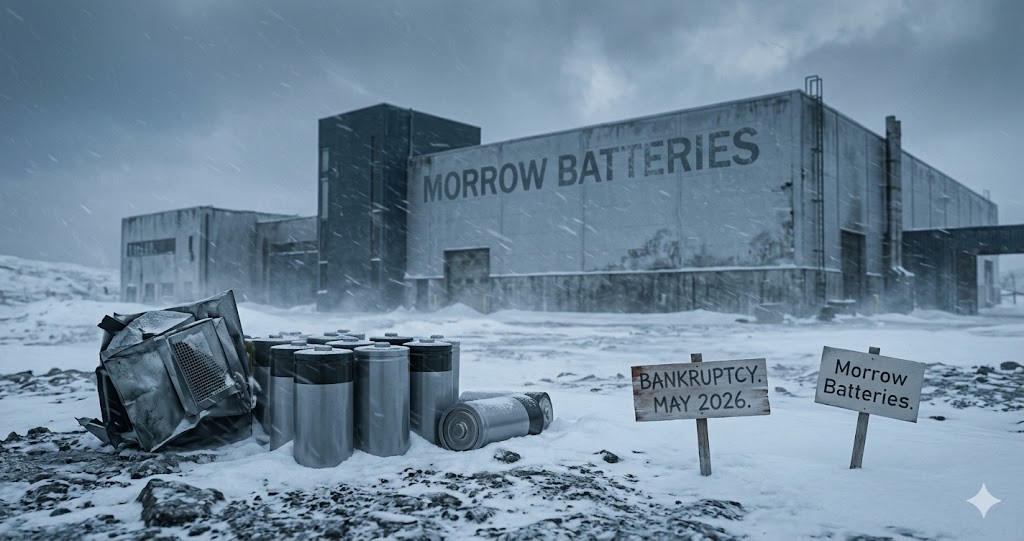
欧州におけるバッテリー自給率の向上とグリーンエネルギーへの転換を目指していたノルウェーのモロー・バッテリーズ社が、その歴史に事実上の幕を下ろすこととなりました。2026年5月7日、同社および主要子会社は破産手続きの申請を決定。政府や大手企業からの多額の出資を受け、商業契約の締結という成功の兆しが見えていた矢先の決断は、新興バッテリーメーカーが直面する「工業化の壁」と、激化する世界市場の厳しさを浮き彫りにしています。
モロー・バッテリーズ破産申請の概要と背景
1. 取締役会による決定の理由
- 資金調達の失敗: 新たな産業投資家の確保とグループへの資金調達プロセスが最終段階にありましたが、進行中の取り組みを完了させるための「追加期間」を確保できず、手元資金が枯渇しました。
- 急激な財務悪化: フィンランドのプロベンティア社や防衛産業との商業契約を締結するなど、事業面での進展はあったものの、ここ数ヶ月でキャッシュフローが急激に悪化しました。
2. 困難を極めた市場環境(背景情報)
- 供給過剰と価格圧力: 世界のバッテリー市場(特に中国勢の台頭)による供給過剰が進行し、販売価格が下落。初期段階の企業にとって収益確保が困難な状況でした。
- 資本コストの増大: 世界的な金利上昇に伴う資本コストの増加と、投資市場の冷え込みが、巨額の資金を必要とする工業化プロセスに直撃しました。
3. 投じられた資金と支援(関連データ)
モロー社には、公的・民間を合わせて多額の資本が投入されていました。
- 株主出資: A Energi、Siemens Financial Services、ABBなどから総額約33億ノルウェークローネ(NOK)。
- 融資保証: 株主による5億NOK以上の追加融資保証。
- 公的支援: イノベーション・ノルウェーによる5億5000万NOKの融資、および欧州・ノルウェーの公的制度による2億200万NOKの助成金。
- インフラ投資: 工業用不動産投資家Sivaが、5億4200万NOKを投じて専門工場ビルを建設。
関連情報:欧州バッテリー業界の現状
モロー社の破産は、個別の経営問題だけでなく、欧州のバッテリーエコシステム全体が直面している構造的課題を反映しています。
- 「死の谷」への直面: 研究開発から大規模量産へ移行する段階(工業化段階)は、最も資金を消費しリスクが高い「死の谷」と呼ばれます。スウェーデンのNorthvolt(ノースボルト)など、他の欧州メーカーも同様の資金調達や生産遅延の課題に直面しました。
- アジア勢との競争: 中国や韓国のメーカーが圧倒的な規模の経済とサプライチェーンの垂直統合を実現している中、欧州の新興勢力はコスト競争力で苦戦を強いられています。
今後の展望
- 管財人の任命: アグデル地方裁判所によって破産管財人が任命され、資産と事業運営の管理が引き継がれます。
- 資産の継承: 経営陣は、培われた技術や施設が長期的な価値を持っていると確信しており、適切な所有者のもとで事業の一部が継続される可能性を模索します。
- 従業員の保護: 従業員はノルウェーの賃金保証制度(NAV管理)によって保護される予定です。
モロー社の暫定CEOであるジョン・フォールド・フォン・ビューローは、「この章は幕を閉じるが、ここで培われた技術と能力は未来への礎になる」と述べ、志半ばでの撤退に無念の意を示しています。
[Flash News] Norway’s Morrow Batteries to Enter Bankruptcy Proceedings Amid Financial Crisis
Norway’s Morrow Batteries, which aimed to increase European battery self-sufficiency and drive the transition to green energy, has effectively come to the end of its journey. On May 7, 2026, the company and its key subsidiaries decided to file for bankruptcy. Despite receiving significant investments from the government and major corporations and showing signs of success with recent commercial contracts, the decision highlights the “wall of industrialization” faced by emerging battery manufacturers and the intensifying severity of the global market.
Overview and Background of Morrow Batteries’ Bankruptcy Filing
1. Reasons for the Board’s Decision
- Failure to Secure Funding: Although the process of securing new industrial investors and group financing was in its final stages, the company could not secure the limited additional time needed to complete these efforts, resulting in exhausted liquidity.
- Rapid Financial Deterioration: While there was operational progress, such as signing long-term supply agreements with Finland’s Proventia and initial commercial contracts in the defense industry, cash flow deteriorated sharply over the past few months.
2. Harsh Market Environment (Context)
- Oversupply and Price Pressure: Oversupply in the global battery market (driven largely by the rise of Chinese manufacturers) led to falling sales prices, making it difficult for early-stage companies to secure revenue.
- Increased Cost of Capital: Rising global interest rates and a tightening investment market hit the capital-intensive industrialization process hard.
3. Capital and Support Invested (Related Data)
Morrow Batteries had received substantial capital from both public and private sectors:
- Shareholder Equity: Approximately 3.3 billion Norwegian Krone (NOK) in total from shareholders including A Energi, Siemens Financial Services, and ABB.
- Loan Guarantees: Over 500 million NOK in additional loan guarantees provided by shareholders.
- Public Support: Two loans totaling 550 million NOK from Innovation Norway and 202 million NOK in grants from European and Norwegian public funding schemes.
- Infrastructure Investment: Siva, an industrial real estate investor, invested 542 million NOK in the construction of the specialized factory building leased to Morrow.
Related Information: Current State of the European Battery Industry
The bankruptcy of Morrow Batteries reflects structural challenges facing the entire European battery ecosystem, rather than just isolated management issues.
- Facing the “Valley of Death”: The transition from R&D to large-scale mass production (the industrialization phase) is known as the “Valley of Death” because it is the most capital-consuming and high-risk stage. Other European manufacturers, such as Sweden’s Northvolt, have faced similar challenges regarding funding and production delays.
- Competition with Asian Players: While Chinese and South Korean manufacturers have achieved overwhelming economies of scale and vertical integration of supply chains, emerging European players struggle to remain cost-competitive.
Future Outlook
- Appointment of a Trustee: The Agder District Court is expected to appoint a bankruptcy trustee shortly to take over management of the company’s assets and operations.
- Inheritance of Assets: Management remains confident that the underlying technology and facilities hold significant long-term value and will explore possibilities for the facility to continue contributing to modern industry under new ownership.
- Employee Protection: Employees will be protected under the Norwegian wage guarantee scheme administered by the Norwegian Labour and Welfare Administration (NAV).
Jon Fold von Bulow, interim CEO of Morrow, expressed his regret over the withdrawal while stating, “This chapter is closing, but the knowledge, technology, and capabilities developed here will be of lasting value.”
コメント