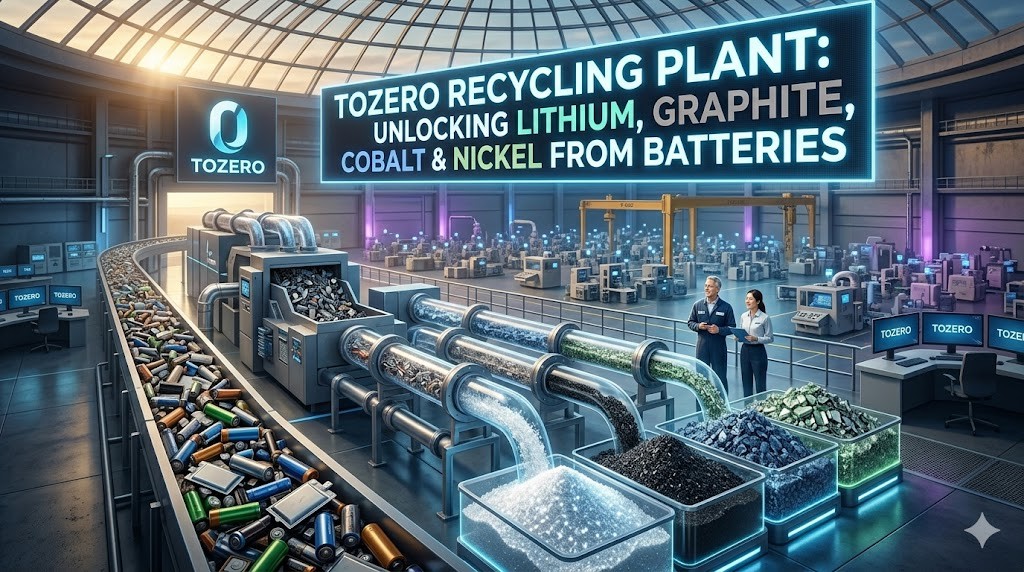
電気自動車(EV)へのシフトが加速する中で、リチウムやコバルトといった希少金属の確保は、欧州にとって経済安全保障上の最優先課題となっています。これまで、使用済みバッテリーの多くは域外へ流出するか、十分な精製がなされずに廃棄されてきました。
こうした中、ドイツのスタートアップ企業Tozeroは、研究室レベルの技術をわずか4年で工業規模へとスケールアップさせることに成功しました。2026年3月に稼働を開始した新プラントは、単なるリサイクル施設ではなく、欧州域内で完結する「循環型サプライチェーン」を構築するための重要な実証拠点となります。
Tozero社:次世代バッテリーリサイクル実証プラントの稼働
ニュースの概要
- 稼働開始日: 2026年3月28日(発表)
- 場所: ドイツ・オーバーバイエルン地方 ゲンドルフ(Gendorf)化学工業団地
- 施設能力: 年間約500トンの電池廃棄物を処理
- 主な回収物: 高純度炭酸リチウム(100トン以上/年)、グラファイト(黒鉛)、ニッケル・コバルト化合物
Tozero社の技術と戦略
Tozeroは、使用済みバッテリーから貴重な資源を効率的に抽出するプロセスに特化しています。
- ブラックマスの専門処理: 同社は電池の解体(機械的処理)自体は行わず、提携パートナーから供給される「ブラックマス」の精錬に集中しています。
- 高い回収率: リチウムの回収率80%以上を目指しており、これはEUが2031年に向けて設定している目標数値を現時点で満たす水準です。
- 迅速なスケールアップ: 設立(2022年)から短期間で、技術を2万5000倍の規模に拡大し、産業利用が可能なレベルに到達させました。
関連情報:欧州のバッテリー市場と背景
Tozeroの取り組みを理解する上で重要な、市場や規制の背景情報を補足します。
1. EUバッテリー規則(EU Battery Regulation)
EUは域内での資源循環を義務付ける厳しい規則を導入しています。2030年代に向けて、リチウムやコバルトなどの「回収義務比率」が段階的に引き上げられており、Tozeroのような技術を持つ企業は、欧州の自動車・エネルギー産業にとって不可欠な存在となっています。
2. ブラックマスの重要性
リチウムイオン電池を放電・解体・破砕すると、正極材や負極材が混ざり合った黒い粉末(ブラックマス)が得られます。ここにはリチウム、ニッケル、コバルト、グラファイトといった高価な原材料が濃縮されており、これをいかに「高純度」かつ「低コスト」で抽出できるかが、リサイクルビジネスの核心です。
3. 今後の展望
- 2030年の目標: ゲンドルフの施設を設計図(ブループリント)とし、2030年までに年間4万5000トンの処理能力を持つフルスケールの商業施設の稼働を目指しています。
- 供給先: 現在、回収された材料は建設、セラミック、潤滑油業界に販売されていますが、今後はバッテリー製造(Battery-to-Battery)への直接供給を拡大する計画です。
施設と投資のデータ
| 項目 | 内容 |
| 所在地 | ドイツ ゲンドルフ化学工業団地(オーストリア国境付近) |
| 投資額 | 数百万ユーロ台半ば(Mid-single-digit million Euro) |
| 従業員数 | ミュンヘン拠点に約30名(10カ国出身) |
| パートナー数 | 欧州10カ国のネットワーク |
CEO サラ・フライシャー(Sarah Fleischer)氏のコメント
「ヨーロッパはエネルギー転換に必要な原材料をまだ十分に確保できていません。私たちの技術は、リサイクルが単なる試験プロジェクトではなく、産業規模で循環型の材料供給を可能にすることを証明しています。」
出典:https://batteryindustry.net/tozero-launches-pilot-battery-recycling-plant-in-upper-bavaria/
German Startup Tozero Opens First Industrial-Scale Plant — Processing 500 Tons of Battery Waste Annually
As the shift toward electric vehicles (EVs) accelerates, securing rare metals such as lithium and cobalt has become a top priority for Europe’s economic security. Historically, many end-of-life batteries have either been exported outside the region or disposed of without adequate refining.
In this context, the German startup Tozero has successfully scaled its laboratory-level technology to an industrial level in just four years. The new plant, which began operations in March 2026, is not merely a recycling facility; it serves as a critical demonstration hub for building a “circular supply chain” contained entirely within Europe.
Tozero: Operation of Next-Generation Battery Recycling Demonstration Plant
News Overview
- Start of Operations: March 28, 2026 (Announcement)
- Location: Gendorf Chemical Park, Upper Bavaria, Germany
- Facility Capacity: Processing approximately 500 tons of battery waste per year
- Main Recovered Materials: High-purity lithium carbonate (over 100 tons/year), graphite, and nickel-cobalt compounds
Tozero’s Technology and Strategy
Tozero specializes in the process of efficiently extracting valuable resources from used batteries.
- Specialized Black Mass Processing: The company does not perform the mechanical dismantling of batteries itself. Instead, it focuses on refining “black mass” supplied by partner companies.
- High Recovery Rate: The company aims for a lithium recovery rate of over 80%, which already meets the targets set by the EU for 2031.
- Rapid Scale-up: Since its founding in 2022, the company has scaled its technology by 25,000 times to reach a level viable for industrial use.
Related Information: European Battery Market and Background
The following background information on markets and regulations is essential to understanding Tozero’s initiatives.
1. EU Battery Regulation
The EU has introduced strict regulations mandating the circulation of resources within the region. With “mandatory recovery rates” for lithium and cobalt set to increase toward the 2030s, companies with technologies like Tozero’s are becoming indispensable to the European automotive and energy industries.
2. The Importance of Black Mass
When lithium-ion batteries are discharged, dismantled, and crushed, a black powder known as “black mass”—a mixture of cathode and anode materials—is produced. This powder contains concentrated high-value raw materials such as lithium, nickel, cobalt, and graphite. The core of the recycling business lies in how purely and cost-effectively these can be extracted.
3. Future Outlook
- 2030 Goal: Using the Gendorf facility as a blueprint, Tozero aims to commission a full-scale commercial facility with an annual processing capacity of 45,000 tons by 2030.
- Supply Destinations: Currently, recovered materials are sold to the construction, ceramic, and lubricant industries. Moving forward, the company plans to expand direct supply for battery manufacturing (Battery-to-Battery).
Facility and Investment Data
| Item | Details |
| Location | Gendorf Chemical Park, Germany (near the Austrian border) |
| Investment Amount | Mid-single-digit million Euro |
| Number of Employees | Approx. 30 at the Munich base (from 10 different countries) |
| Number of Partners | Network spanning 10 European countries |
Comment from CEO Sarah Fleischer
“Europe does not yet have enough of the critical raw materials needed to build and scale its own energy transition and battery industry. Our technology, now scaled up 25,000 times, changes this by making the recycling of used batteries and the extraction of these materials at an industrial scale possible for the first time. We are consistently proving that recycling is not just a pilot project, but can be realized at a level that provides a circular domestic supply of critical materials for Europe’s future.”

コメント