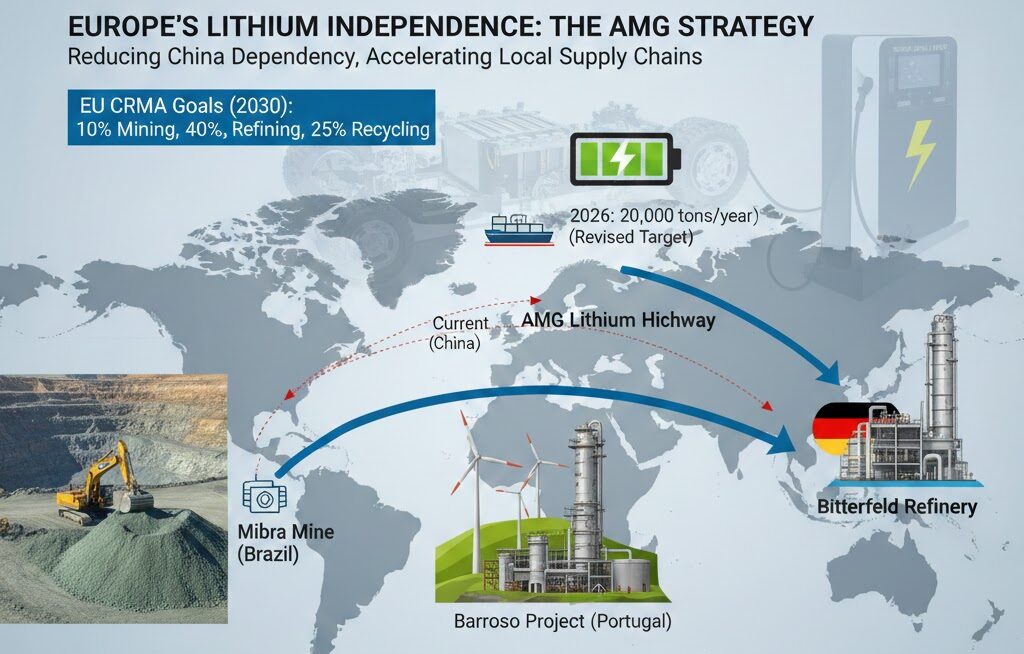
電気自動車(EV)シフトが進む中、欧州の最大の懸念はリチウム精製を中国に完全に依存していることだ。現在、世界の採掘量は南米や豪州が主だが、その「精製(バッテリーグレードへの変換)」の多くは中国で行われている。
オランダのAMGクリティカルマテリアルズは、この現状を打破するため、ブラジル、ポルトガル、ドイツの3カ国を結ぶ独自の「リチウムハイウェイ(Lithium Highway)」構想を加速させている。
1. 「中国依存」の現状とAMGの脱却戦略
現在、AMGはブラジルのミブラ(Mibra)鉱山でリチウム精鉱(リシア輝石)を生産しているが、それを一度中国へ輸送し、リチウム含有量を高める処理を行ってから、再びドイツの拠点へ送るという工程を踏んでいる。
- 課題: 中国を中継することで輸送コストと地政学的リスクが増大する。
- 解決策: ブラジルとポルトガルに自社で精製能力を持たせ、西側諸国だけで完結する処理体制を確立する。
- メリット: 「欧州で生産が始まれば、中国経由で運ぶよりもはるかに安価になる(AMG開発責任者 マイケル・コナー氏)」としている。
2. 拠点の役割と現状の進捗
AMGは、欧州の「重要原材料法(CRMA)」に足並みをそろえ、域内での調達・精製率を高める計画だ。
| 拠点 | 役割と進捗状況 |
| ブラジル(ミブラ鉱山) | 原料(リシア輝石精鉱)の増産と、現地での精製プロセスの導入。 |
| ポルトガル | サバンナ・リソーシズ社(AMGが筆頭株主)が進める「バローゾ・リチウムプロジェクト」などを通じ、欧州最大級の鉱床を開発。 |
| ドイツ(ビッターフェルト) | 欧州初のリチウム精製所。2024年に開所し、2026年末までに年産2万トンの水酸化リチウム生産(EV約50万台分)をフル稼働させる計画。 |
3. 直面する課題:市場の停滞と遅延
「欧州は中国に追いつける」と強気な姿勢を見せる一方で、現実は計画よりも遅れている。
- フル稼働の遅延: ビッターフェルト工場は当初の計画より2年遅れの2026年末にフル稼働予定。
- 目標の未達: 2030年までに年産10万トンという当初目標には届かない見込み(2030年時点での需要予測が下方修正されたことも要因)。
- 原因: 市場の需要が予想より弱まっていることや、自動車メーカー等による品質調査に時間がかかっていることが挙げられる。
4. 補足:欧州リチウム自給率の目標
欧州連合(EU)は2030年までに、域内で消費する重要原材料の10%を採掘、40%を精製、25%をリサイクルで賄うという法的目標を掲げている。AMGの取り組みはこの「40%の精製」を担う第一走者としての期待を背負っている。
出典:https://www.reuters.com/business/energy/dutch-lithium-supplier-amg-seeks-bypass-china-2026-01-29/
Europe’s “Lithium Highway”: AMG’s Bold Move to Break China’s Monopoly and Revolutionize the Supply Chain
As the global shift toward electric vehicles (EVs) accelerates, Europe faces a critical vulnerability: its near-total reliance on China for lithium refining. While the majority of the world’s lithium is mined in South America and Australia, the complex process of refining it into battery-grade material is currently dominated by Chinese facilities.
To challenge this status quo, Dutch supplier AMG Critical Materials is accelerating its proprietary “Lithium Highway” initiative—a strategic corridor connecting Brazil, Portugal, and Germany to bypass Chinese processing entirely.
1. The “Pressure Dilemma”: Strategy to Eliminate China Dependency
Currently, AMG produces spodumene concentrate (lithium-bearing mineral) at its Mibra mine in Brazil. However, this material must be shipped to China to be upgraded from approximately 6% lithium content to nearly 100% before it can be sent to Europe for final processing.
- The Challenge: Shipping raw materials to China for midstream processing creates significant logistics costs and high geopolitical risks.
- The Solution: AMG is building internal refining capacity in Brazil and Portugal to establish a processing cycle contained entirely within Western jurisdictions.
- The Benefit: “Once production takes place in Europe, it becomes much cheaper to produce lithium here than to ship it via China,” says Michael Connor, AMG’s Head of Development.
2. Strategic Hubs and Project Progress
AMG is aligning its operations with the European Union’s Critical Raw Materials Act (CRMA) to increase regional self-sufficiency in sourcing and refining.
| Location | Role and Current Status |
| Brazil (Mibra Mine) | Increasing production of spodumene concentrate and introducing on-site midstream refining processes. |
| Portugal | Developing Europe’s largest lithium deposit through Savannah Resources (where AMG is the lead shareholder). The Barroso project was designated an EU Strategic Project in 2025. |
| Germany (Bitterfeld) | Europe’s first major lithium refinery. Opened in 2024, it aims to reach full capacity of 20,000 tonnes of lithium hydroxide per year (enough for 500,000 EVs) by late 2026. |
3. Facing Reality: Market Stagnation and Delays
While the “Europe can catch up” sentiment remains strong, the project has faced significant headwinds.
- Operational Delays: The Bitterfeld plant is expected to reach full capacity by the end of 2026—two years later than originally planned.
- Target Revisions: Due to these delays, the company is unlikely to meet its initial 2030 goal of 100,000 tonnes per year.
- Root Causes: Slower-than-expected EV market demand in Europe and lengthy qualification processes by automotive manufacturers have slowed the ramp-up.
4. Context: EU Self-Sufficiency Targets for 2030
Under the CRMA, the European Union has set legally binding targets for 2030 to ensure that:
- 10% of strategic raw materials are mined within the EU.
- 40% are refined/processed within the EU.
- 25% are sourced from recycling.
AMG’s “Lithium Highway” is the primary frontrunner in achieving the 40% refining target, making it a cornerstone of Europe’s industrial sovereignty.

コメント