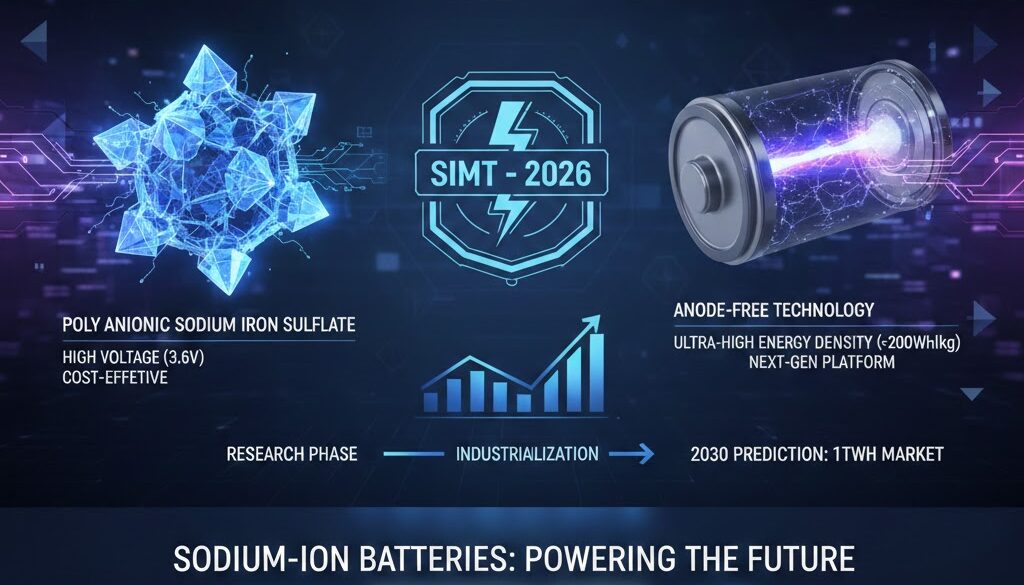
2026年、中国の「鈉遠新材(SIMT)」が数千万元の資金調達を実施し、年産1万トン規模の量産体制へ舵を切りました。リチウム価格の変動リスクを回避し、エネルギー安全保障を強化する次世代技術として、ナトリウムイオン電池は「研究段階」から「産業化」のフェーズへ完全に移行しています。
1. 鈉遠新材(SIMT)の技術的優位性
SIMTは、従来のナトリウム電池が抱えていた「エネルギー密度の低さ」と「寿命の短さ」を独自技術で克服しつつあります。
- 独自材料「改質ポリアニオン系硫酸鉄ナトリウム」:
- コスト: 原料に副産物を利用し、正極材料の材料費を1トンあたり1万元(約21万円)以下に抑制。
- 電圧: 3.6Vの高電圧を実現。これは次世代の全固体電池やアノードフリー技術の基盤となります。
- アノードフリー技術:
- 現在、エネルギー密度の理論値は200Wh/kgを突破する見込みで、安価なリン酸鉄リチウム(LFP)だけでなく、三元系リチウム電池の一部とも競合可能なレベルに達しています。
- 環境性とリサイクル: 硫酸鉄ナトリウムは水溶性のため、従来の電池に比べてシンプルかつクリーンなリサイクルが可能です。
2. 急成長する市場予測(2030年への展望)
ナトリウムイオン電池は、2030年に向けて爆発的な成長が見込まれています。
| 項目 | 2025年〜2026年現在 | 2030年の予測 |
| 全体市場規模 | 約4GWh / 数億ドル | 1TWh (1,000GWh) / 約11兆円 |
| 正極材料需要 | 約2,000トン | 200万トン |
| 主要ターゲット | 二輪車、鉛蓄電池の代替 | データセンター、大型蓄電(ESS)、小型EV |
3. 多角化するターゲット市場とグローバル戦略
SIMTは、鉛蓄電池が支配的な軽量動力市場を足がかりに、高付加価値な先端分野への進出を狙っています。
- 軽量動力市場: 二輪・三輪車市場の95%を占める鉛蓄電池を、高性能・長寿命なナトリウム電池で置き換える。
- 産業・先端インフラ: * AIデータセンター: 膨大な電力を消費するデータセンターのバックアップ電源(UPS)。
- 航空機・ロボット: 高エネルギー密度のアノードフリー技術が実用化されれば、これらの分野でも採用が期待されます。
- グローバル展開: * 欧州: 環境規制(鉛規制)の強化を背景に、安全でクリーンな代替品としての需要。
- 東南アジア: 急増する電動二輪車市場での普及。
【関連情報の補足】なぜ今、ナトリウム電池が再注目されているのか?
- リチウム供給の地政学的リスク: リチウム資源が一部の地域に偏っているのに対し、ナトリウムは塩などから無尽蔵に採取可能で、サプライチェーンの安定性が極めて高いのが特徴です。
- 低温特性と安全性: ナトリウム電池は低温下(-20℃以下)でも性能が落ちにくく、発火リスクもリチウム電池より低いとされています。
- 既存設備の流用: ナトリウム電池の製造ラインは、既存のリチウムイオン電池工場の設備を大部分流用(ドロップイン)できるため、量産化のハードルが比較的低いという利点があります。
Overcoming the Challenges of Sodium Iron Sulfate: Achieving “High Stability & Low Cost” Next-Generation Cells through Proprietary Material Design
In 2026, the Chinese startup Sodium Frontier New Materials (SIMT) secured tens of millions of yuan in funding and pivoted toward a mass production capacity of 10,000 tons per year. As a next-generation technology that mitigates the risks of lithium price volatility and strengthens energy security, Sodium-ion batteries (SIBs) have officially transitioned from the “research phase” to the “industrialization” phase.
1. Technical Advantages of SIMT
SIMT is overcoming the traditional SIB drawbacks of “low energy density” and “short cycle life” through proprietary innovations.
- Proprietary Material: “Modified Polyanionic Sodium Iron Sulfate”
- Cost: By utilizing industrial by-products as raw materials, the cathode material cost is suppressed to below 10,000 RMB (approx. $1,400) per ton.
- Voltage: Achieves a high voltage of 3.6V, serving as a foundation for next-generation all-solid-state and anode-free technologies.
- Anode-Free Technology:
- Theoretical energy density is expected to surpass 200 Wh/kg, reaching a performance level competitive not only with low-cost LFP (Lithium Iron Phosphate) but also with some NCM (Nickel Cobalt Manganese) ternary batteries.
- Sustainability & Recycling: Due to the water-soluble nature of sodium iron sulfate, the batteries can be recycled via simpler and cleaner methods compared to traditional cells.
2. Explosive Market Growth Forecast (Outlook for 2030)
The Sodium-ion battery market is projected to see exponential growth leading up to 2030.
| Item | Present (2025–2026) | 2030 Forecast |
| Total Market Size | ~4 GWh / Hundreds of Millions USD | 1 TWh (1,000 GWh) / ~75 Billion USD |
| Cathode Material Demand | ~2,000 tons | 2 Million tons |
| Primary Targets | Two-wheelers, Lead-acid replacement | Data Centers, Utility-scale ESS, Compact EVs |
3. Diversified Target Markets and Global Strategy
SIMT is leveraging the light-power market (currently dominated by lead-acid batteries) as a stepping stone into high-value advanced sectors.
- Light-Power Market: Aiming to replace lead-acid batteries—which currently hold 95% of the two/three-wheeler market—with high-performance, long-life sodium batteries.
- Industrial & Advanced Infrastructure:
- AI Data Centers: Providing backup power (UPS) for power-hungry AI infrastructure.
- Aviation & Robotics: Adoption is expected in these fields once high-energy-density anode-free technology is fully commercialized.
- Global Expansion:
- Europe: Driven by stricter environmental regulations on lead and a demand for safe, clean alternatives.
- Southeast Asia: Driven by the rapid surge in the electric two-wheeler market.
Appendix: Why are Sodium-ion Batteries Back in the Spotlight?
- Geopolitical Risk of Lithium: While lithium resources are geographically concentrated, sodium is abundantly available (e.g., from salt), ensuring high supply chain stability.
- Low-Temperature Performance & Safety: SIBs maintain performance in extreme cold (down to -20°C or lower) and possess a lower risk of thermal runaway compared to lithium-ion batteries.
- Equipment Compatibility: SIB production lines can largely utilize existing lithium-ion battery manufacturing equipment (“drop-in” compatibility), significantly lowering the barrier to mass production.
コメント