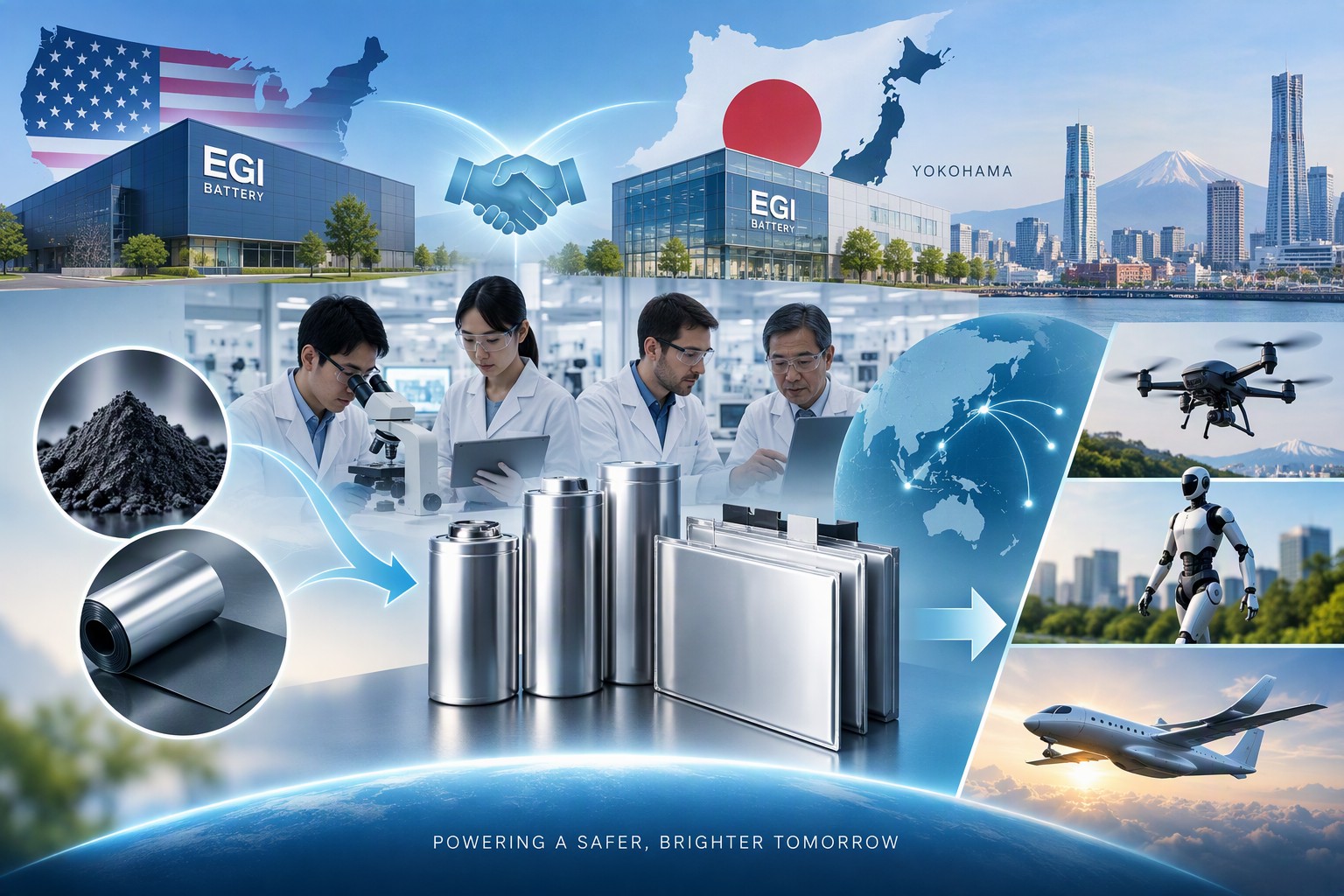
次世代のドローンやロボティクス、航空機などの電動化が進むなか、高い安全性とエネルギー密度を備えた先進リチウムイオン電池の開発・量産競争が激化しています。特に安全保障やサプライチェーンの観点から、米国では中国依存を脱却した国内生産体制(NDAA準拠など)の構築が急務となっている一方、材料科学や精密なセル製造の分野では依然として日本の高度な技術力と経験豊富な人材に熱い視線が注がれています。こうした動きのなか、米国資本のリチウムイオン電池メーカーであるEGI Batteryが、研究開発とアジア市場展開の拠点として日本法人と技術センターを横浜に設立しました。
新拠点の概要と目的
- 日本法人と技術センターの開設: 米国ミシガン州アナーバーに拠点を置くEGI Batteryは、日本子会社であるEGIバッテリー株式会社(EGI Battery KK)を設立し、横浜市に日本テクニカルセンターを正式に開設しました。
- 初期の重点領域と事業計画: 同センターは当初、先進的なバッテリー材料の評価、研究開発、日本の優秀な素材サプライヤーとの関係強化、および技術提携の促進に注力します。将来的には、電極を中心としたセル設計やバッテリー製造能力の構築へと機能を拡大していく計画です。
- アジア太平洋地域の拠点機能: 研究開発にとどまらず、アジア太平洋地域全体の顧客やパートナーと直接連携する現地拠点としての役割も担い、地域市場のニーズを同社のセル開発や商業化に結びつけます。
経営陣の体制と関連情報
- 経験豊富なトップの起用: 日本法人の社長および横浜事業の統括責任者には、田渕淳二氏が就任しました。田渕氏は宇部興産(現UBE)、NECトーキン、E-One Moli Energyなどで35年以上にわたりリチウムイオン電池の研究開発に携わり、特に宇部興産では電解液やセパレータなどの電池材料の研究開発を主導した実績を持ちます。日本が長年培ってきた電池材料のエコシステムと人材を活用する狙いが鮮明です。
- 日米連携による量産体制の構築: 横浜での材料評価や研究開発は、米国ミシガン州アナーバーにあるZeeb製造センターの拡張計画を補完するものです。米国拠点では現在、パウチ型電池の充填・化成工程が稼働しており、2027年にはセルの一貫生産(フルセル生産)を開始する予定です。
- NDAA準拠と特殊用途への強み: EGI Batteryは一般的なEV向けだけでなく、次世代ドローン、自律移動ロボット、電動航空機(eVTOLなど)といった高出力・高信頼性が求められる特殊用途向け電池に強みを持ちます。米国国防権限法(NDAA)に準拠したセルを米国内で一貫生産できる体制を整えることで、防衛・産業分野における脱中国サプライチェーンの需要を確実に取り込む戦略です。
今後の展望
研究室レベルの技術革新を実際の商業生産へとスムーズに移行させるため、日本の高度な材料科学・プロセス技術と、米国の量産インフラを掛け合わせる日米ハイブリッド体制が本格始動しました。2027年の米国工場におけるフルセル生産開始に向け、横浜の日本テクニカルセンターは、次世代電池の商業化を加速させる中核的なイノベーションハブとしての役割を果たしていく見通しです。
EGI Battery Establishes Japan Technical Center in Yokohama, Linking Japanese Materials Technology with US Mass-Production Base
As the electrification of next-generation drones, robotics, and aircraft advances, competition to develop and mass-produce advanced lithium-ion batteries offering high safety and energy density is intensifying. From a national security and supply chain perspective, establishing domestic production systems free from reliance on China—such as compliance with the National Defense Authorization Act (NDAA)—has become an urgent priority in the United States. At the same time, Japan’s advanced technological capabilities and experienced talent in materials science and precision cell manufacturing continue to attract strong interest. Amid these trends, U.S.-based lithium-ion battery manufacturer EGI Battery has established a Japanese subsidiary and technical center in Yokohama as a hub for research and development and expansion into the Asian market.
Overview and Objectives of the New Facility
- Establishment of Japanese Subsidiary and Technical Center: Headquartered in Ann Arbor, Michigan, EGI Battery has established its Japanese subsidiary, EGI Battery KK, and officially opened the Japan Technical Center in Yokohama.
- Initial Focus Areas and Business Plans: The center will initially focus on evaluating advanced battery materials, conducting R&D, strengthening relationships with leading Japanese material suppliers, and fostering technical partnerships. Over time, it plans to expand its capabilities into electrode-centric cell design and battery manufacturing.
- Asia-Pacific Regional Hub: Beyond R&D, the facility will serve as a local base to collaborate directly with customers and partners across the Asia-Pacific region, connecting regional market needs with the company’s cell development and commercialization efforts.
Leadership Structure and Related Information
- Appointment of an Experienced Leader: Junji Tabuchi has been appointed President of EGI Battery KK and head of Yokohama operations. Tabuchi brings over 35 years of experience in lithium-ion battery R&D at companies such as Ube Industries (now UBE), NEC TOKIN, and E-One Moli Energy, notably leading R&D for battery materials like electrolytes and separators at Ube Industries. This appointment underscores a clear strategy to leverage Japan’s long-cultivated battery materials ecosystem and talent pool.
- Building a Mass-Production System Through US-Japan Collaboration: Material evaluation and R&D in Yokohama will complement the expansion of EGI’s Zeeb Manufacturing Center in Ann Arbor, Michigan. The U.S. facility currently operates filling and formation processes for pouch-type batteries and is scheduled to begin full cell production in 2027.
- Strengths in NDAA Compliance and Specialized Applications: In addition to general EVs, EGI Battery specializes in batteries for specialized applications requiring high output and high reliability, such as next-generation drones, autonomous mobile robots, and electric aircraft (including eVTOLs). By establishing an integrated domestic production system in the U.S. for cells compliant with the NDAA, the company aims to capture demand for non-Chinese supply chains in the defense and industrial sectors.
Future Outlook To smoothly transition laboratory-level technological innovations into actual commercial production, a U.S.-Japan hybrid structure combining Japan’s advanced materials science and process technologies with U.S. mass-production infrastructure has officially launched. Ahead of the 2027 start of full cell production at its U.S. plant, the Japan Technical Center in Yokohama is expected to serve as a core innovation hub accelerating the commercialization of next-generation batteries.
コメント