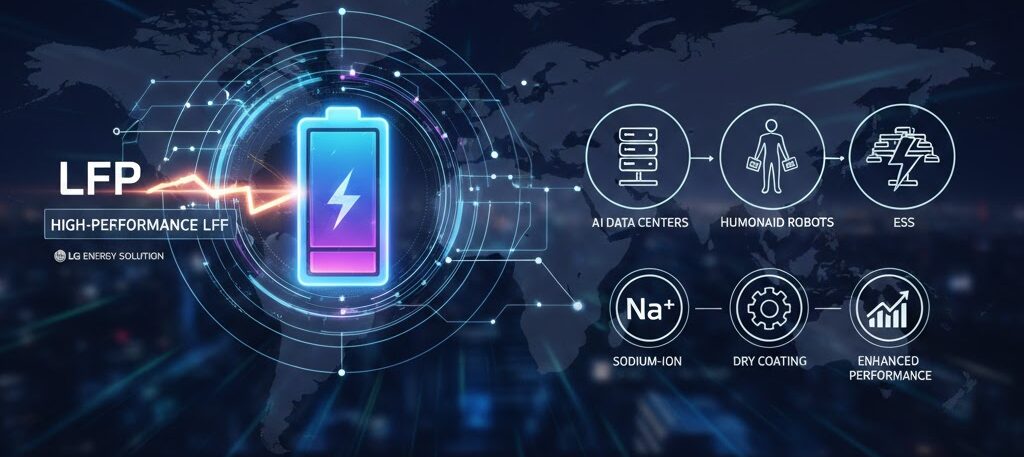
LGエナジー(LG Energy Solution)は、中国メーカーが市場を席巻している「LFP(リン酸鉄リチウム)電池」に対し、独自の改良を加えた高性能モデルで勝負を挑みます。
- 高性能LFPの投入: 2027年にエネルギー密度と寿命を大幅に高めた新型LFP電池の量産を開始予定。
- ESS事業の拡大: 既存のEV生産ラインをESS用セル生産へと転換。生産能力を従来の36GWhから60GWh以上に引き上げ、受注目標を90GWhに設定。
- ターゲット市場: EV需要の減速を受け、AIデータセンターのバックアップ電源やESS、ヒューマノイドロボットなど需要が急増する分野に注力。
技術背景:競争力の源泉となる3つの柱
LGエナジーは、LFPの改良だけでなく、コストと性能を劇的に改善する次世代技術へ積極的に投資しています。
1. ナトリウムイオン電池
リチウムよりも安価で豊富に存在するナトリウムを利用。低温特性に優れ、安全性が高いため、LFPの低コスト代替品として、特に短距離走行のEVやESS市場で期待されています。
2. ドライコーティング技術(乾式プロセス)
従来の「湿式プロセス(溶剤を混ぜて塗布・乾燥させる)」に代わる技術です。
- メリット: 乾燥工程が不要になるため、消費電力、設備投資額、設置スペースを大幅に削減可能。
- 進捗: 試験生産を完了しており、2028年末までに量産開始を目指しています。テスラなども取り組む「バッテリー製造のゲームチェンジャー」です。
3. 高性能化の背景
これまでLFP電池は「低価格・低出力」というイメージでしたが、データセンター等のインフラ需要では、より長い製品寿命と高い出入力性能が求められています。LGはこの領域を「高付加価値ソリューション」として再定義し、単なる価格競争から脱却を図っています。
市場環境と戦略的意義
- 対中国戦略: 現在のLFP市場は中国勢が圧倒的です。LGは「実行力」と「技術的な差別化」により、グローバルなサプライチェーンにおいて中国勢への依存を減らしたい顧客のニーズを取り込もうとしています。
- 業績回復の兆し: 2025年第4四半期の損失を経て、成長が見込まれるESS分野を収益の柱に据え、2026年後半からの業績回復を見込んでいます。
LG Energy Solution to Challenge Chinese Competitors with High-Performance LFP Models
LG Energy Solution (LGES) is set to challenge the dominance of Chinese manufacturers in the LFP (Lithium Iron Phosphate) battery market by introducing its own high-performance, upgraded models.
Key Strategic Initiatives
- High-Performance LFP Launch: The company plans to begin mass production of a new type of LFP battery by 2027, featuring significantly improved energy density and cycle life.
- Expansion of ESS Business: LGES is converting existing EV battery production lines to focus on ESS (Energy Storage System) cell production. This move increases capacity from the current 36 GWh to over 60 GWh, with a target of securing at least 90 GWh in orders for the year.
- Target Markets: Amidst a slowdown in EV demand, LGES is focusing its efforts on high-growth sectors such as backup power for AI data centers, energy storage systems, and humanoid robots.
Technical Foundations for Competitiveness
Beyond improving LFP technology, LGES is aggressively investing in next-generation technologies to dramatically enhance cost and performance metrics.
1. Sodium-Ion Batteries
- Advantages: Uses sodium, which is more abundant and cheaper than lithium. Sodium-ion batteries offer excellent low-temperature performance and high safety, making them a promising low-cost alternative to LFP batteries for short-range EVs and ESS applications.
2. Dry-Coating Technology (Dry Process)
- Innovation: Replaces the traditional “wet process” (which involves mixing solvents and drying).
- Benefits: Eliminates the drying stage, allowing for substantial reductions in energy consumption, capital expenditure, and facility footprint.
- Status: Pilot production has been completed, with full-scale production targeted for late 2028. This technology is considered a “game-changer” in battery manufacturing, and is also being pursued by global competitors like Tesla and Samsung SDI.
3. Redefining Performance Standards
Traditionally, LFP batteries have been viewed as “low-cost/low-output” options. However, as infrastructure demands from sectors like AI data centers increase, there is a growing need for higher power output and longer lifespans. LGES is repositioning LFP as a “high-value solution” to move beyond simple price-based competition.
Market Environment and Strategic Significance
- Countering Chinese Dominance: Chinese manufacturers currently hold a dominant position in the global LFP market. Through superior “execution” and technological differentiation, LGES aims to capture demand from global customers looking to reduce their reliance on Chinese supply chains.
- Earnings Recovery: Following a loss in the fourth quarter of 2025, LGES is positioning its ESS business as a core revenue driver, with expectations for a performance turnaround beginning in the second half of 2026.

コメント