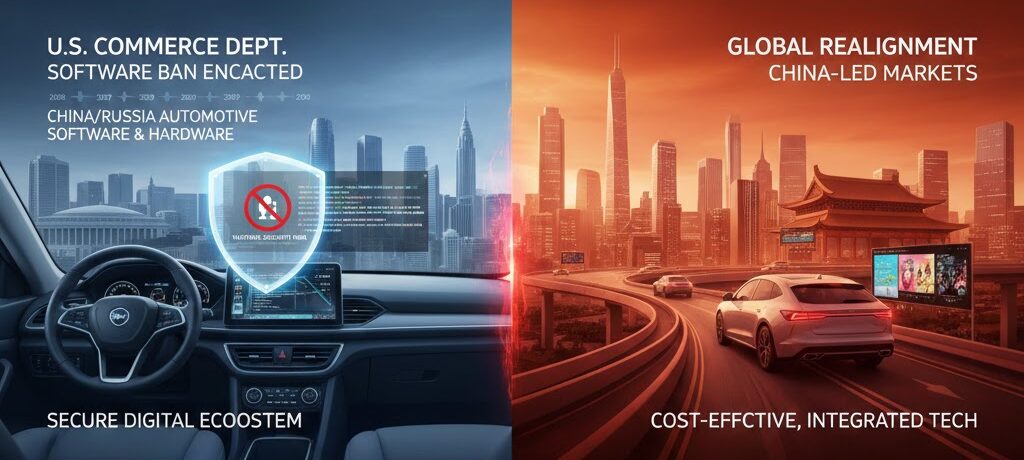
米国商務省・産業安全保障局(BIS)は、2026年3月17日から中国およびロシア製の車載ソフトウェアの使用を全面的に禁止する最終規則を適用します。これは、現代の自動車が「走るスマートフォン」と化し、常にネットワークに接続されるコネクテッドカーとなったことで、安全保障上のリスク(情報流出や遠隔操作によるテロ等)が無視できなくなったためです。
規制のスケジュールと対象
- 2026年3月17日: ソフトウェア規制の効力発生。
- 2027年モデル: 中国・ロシア製ソフトウェアを搭載した車両の販売・輸入禁止。
- 2029年1月: 中国製ハードウェア(特定の車種に依存しない部品)の禁止。
- 2030年モデル: 中国・ロシア製ハードウェアを搭載した車両の販売・輸入禁止。
関連情報:なぜ「ソフト」が標的なのか
従来の自動車は機械部品の集合体でしたが、現在は SDV(Software Defined Vehicle:ソフトウェア定義車両) への移行が進んでいます。自動運転や車内エンターテインメントを制御するOS(基本ソフト)にバックドア(不正な侵入口)が仕掛けられた場合、国家規模で車両を停止させたり、位置情報を収集したりすることが理論上可能になります。米国はこの「目に見えないリスク」を排除しようとしています。
サプライチェーンにおける「脱中国」の実態
経済合理性よりも安全保障を優先する動きにより、電池や部品の調達網が激変しています。
- 輸入電池シェアの急落: 米国における輸入電池に占める中国企業の割合は、2024年の81%から、2025年1月から7月には43%へとほぼ半減しました。
- 補助金による排除: 米国のインフレ抑制法(IRA)により、中国などの「懸念される外国の事業体(FEOC)」から調達した材料を含むEVは、税額控除の対象外となります。これが実質的な非関税障壁として機能しています。
- メーカーの対応: GMは2027年までの供給網クリーン化を取引先に要求し、テスラも2026年初めまでに米国産車両から中国拠点部品を排除する方針を固めています。
直面する技術的・経済的課題
この「デジタル鎖国」とも言える政策には、極めて高い代償が伴います。
1. 「潔白の証明」の困難さ
車載ソフトは、ティア1(直接取引)からティア3以下の細かいサプライヤーまで多層構造になっています。
- ソースコードの壁: 中国企業のコードが一部でも含まれていないか確認するにはソースコードの開示が必要ですが、企業の知的財産権(IP)が壁となり、完全な調査は困難を極めます。
- 検証コスト: ソフトを入れ替えるには膨大な再検証が必要で、メーカーにとっては「技術的負債」の一括返済を迫られる状況です。
2. コスト増と国際競争力の低下
- 開発費の高騰: 中国の安価で高速な開発環境を捨て、賃金の高い米国内でソフト開発を行うことは、EV事業の収益をさらに圧迫します。
- 孤立のリスク: 米国が独自の安全基準で供給網を閉じれば、東南アジアや中東、アフリカなど、中国製が普及する他市場の規格から孤立し、米国産車両が「ガラパゴス化」する恐れがあります。
3月17日の「決別」が意味するもの
この規制は、単なる貿易摩擦ではなく、「効率と自由貿易の時代」から「安全保障とブロック経済の時代」への完全な転換点を象徴しています。
3月末に予定される米中首脳会談が、この強硬路線の唯一の調整局面となりますが、歩み寄りが見られなければ、世界は「中国系デジタル圏」と「非中国系デジタル圏」に分断されることになります。かつて「安さ」で世界を席巻した中国製デバイスは、今や「安全に対するリスク」という負の側面が強調され、自動車産業のあり方を根本から変えようとしています。
出典:https://topics.smt.docomo.ne.jp/article/merkmalbiz/business/merkmalbiz-111253
March 17, 2026: The Enforcement of “China-Free” Automotive Software. The U.S. Deadline for a Clean Break
The U.S. Department of Commerce, Bureau of Industry and Security (BIS), will implement a final rule on March 17, 2026, to fully ban the use of automotive software from China and Russia. This move comes as modern vehicles have evolved into “smartphones on wheels”—connected cars that are constantly online—making national security risks such as data leaks and remote-controlled terrorism impossible to ignore.
Regulatory Schedule and Targets
- March 17, 2026: Software regulations take effect.
- 2027 Model Year: Ban on sales and imports of vehicles equipped with Chinese or Russian software.
- January 2029: Ban on Chinese hardware (components not specific to a particular vehicle model).
- 2030 Model Year: Ban on sales and imports of vehicles equipped with Chinese or Russian hardware.
Context: Why Is Software the Target?
While traditional cars were collections of mechanical parts, the industry is now shifting toward SDVs (Software Defined Vehicles). If a “backdoor” (unauthorized entry point) is embedded in the Operating System (OS) that controls autonomous driving or in-car entertainment, it becomes theoretically possible to disable vehicles on a national scale or collect location data. The U.S. is moving to eliminate these “invisible risks.”
The Reality of “Decoupling from China” in the Supply Chain
The push to prioritize national security over economic rationality is drastically reshaping the supply chain for batteries and components.
- Plummeting Share of Imported Batteries: The share of Chinese companies in U.S. battery imports fell from 81% in 2024 to 43% between January and July 2025, nearly a 50% drop.
- Exclusion via Subsidies: Under the U.S. Inflation Reduction Act (IRA), EVs containing materials sourced from “Foreign Entities of Concern” (FEOC), such as China, are ineligible for tax credits. This acts as a de facto non-tariff barrier.
- Manufacturer Response: GM has demanded its suppliers clean up their supply chains by 2027, and Tesla has set a policy to eliminate Chinese-sourced parts from U.S.-made vehicles by early 2026.
Technical and Economic Challenges
This policy, which could be described as “Digital Isolationism,” comes with an extremely high price tag.
1. The Difficulty of “Proving Innocence”
Automotive software has a multi-layered structure involving Tier 1 (direct) suppliers down to Tier 3 and beyond.
- The Source Code Barrier: Verifying that no Chinese code is present requires source code disclosure. However, corporate Intellectual Property (IP) rights create a significant barrier, making a full audit extremely difficult.
- Verification Costs: Replacing software requires massive re-verification. Manufacturers are effectively being forced to pay off their “technical debt” all at once.
2. Rising Costs and Declining Global Competitiveness
- Surging Development Expenses: Abandoning China’s cheap and fast development environment for U.S.-based development with higher wages will further squeeze EV profit margins.
- Risk of Isolation: If the U.S. closes its supply chain with unique safety standards, it risks becoming “Galapagos-ized”—isolated from global standards in markets like Southeast Asia, the Middle East, and Africa where Chinese products are prevalent.
What the “March 17 Break” Signifies
This regulation is more than just a trade dispute; it symbolizes a complete turning point from an “era of efficiency and free trade” to an “era of national security and bloc economies.”
The U.S.-China Summit scheduled for late March will be the only remaining opportunity to adjust this hardline stance. If no compromise is reached, the world will be split into “Chinese digital spheres” and “non-Chinese digital spheres.” Chinese devices, which once dominated the world through low prices, are now highlighted for their security risks, fundamentally altering the future of the automotive industry.

コメント
Этот интересный отчет представляет собой сборник полезных фактов, касающихся актуальных тем. Мы проанализируем данные, чтобы вы могли сделать обоснованные выводы. Читайте, чтобы узнать больше о последних трендах и значимых событиях!
Получить дополнительные сведения – https://vivod-iz-zapoya-2.ru/