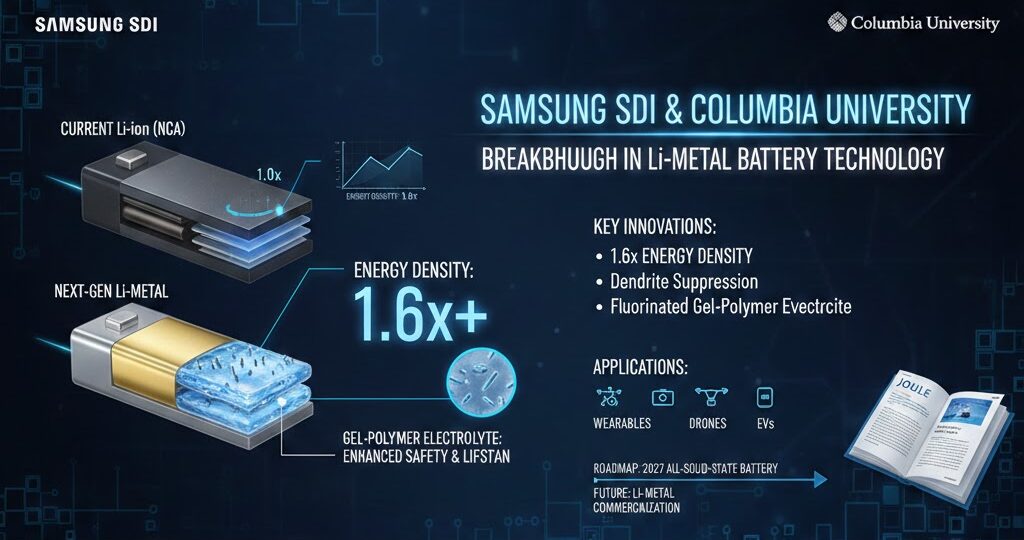
サムスンSDIは、コロンビア大学との共同研究により、次世代の「リチウム金属電池(リチウムメイル電池)」の致命的な弱点であった短寿命と安全性を劇的に改善する新しい電解液技術を発表しました。この成果は、エネルギー分野の最高権威誌の一つである「Joule」に掲載されました。
技術の核心:なぜ画期的なのか?
- 圧倒的なエネルギー密度: リチウム金属電池は、負極に金属リチウムを使用することで、既存のリチウムイオン電池(NCAなど)の1.6倍以上のエネルギー密度を実現します。
- デンドライト抑制: リチウム金属電池の最大の課題は、充放電時に針状の結晶(デンドライト)が成長し、内部短絡や発火を引き起こすことでした。
- 新素材の導入: 開発された「フッ素系ゲルポリマー電解質」は、負極表面に安定した界面を形成。デンドライトの発生を物理的・化学的に抑え込み、数十サイクルが限界だった寿命を大幅に延長しました。
【関連情報】次世代電池を巡るサムスンSDIの戦略
- 全固体電池との二段構え:サムスンSDIは、現在「全固体電池」の2027年量産開始を目指しています。今回のリチウム金属電池は、より高いエネルギー密度を追求する別の柱として、ウェアラブルデバイスや高性能ドローン、EV(電気自動車)などへの応用が期待されています。
- グローバルR&Dネットワーク:今回の研究は、米国の「SDI R&D America (SDIRA)」と韓国の本部、そしてコロンビア大学が連携した成果です。同社は欧州や中国にも研究拠点を設けており、現地のトップ大学との産学連携を加速させています。
- 商用化へのロードマップ:リチウム金属電池はまだ研究段階の要素が強いものの、今回の電解質の改良により、商業化に向けた「安全性」という最大のハードルを一つ越えたと評価されています。
まとめの比較表:現行電池 vs リチウム金属電池
| 項目 | NCAリチウムイオン電池 (現行) | リチウム金属電池 (次世代) |
| エネルギー密度 | 1.0 (基準) | 1.6倍以上 |
| 負極材料 | グラファイト (黒鉛) | 金属リチウム |
| 主な課題 | 容量の限界 | デンドライトによる短絡・短寿命 |
| 新技術の効果 | – | ゲルポリマーにより安全性と寿命が向上 |
出典:https://batteryindustry.net/samsung-sdi-presents-enhanced-electrolyte-for-lithium-metal-batteries/
Samsung SDI Unveils Innovative Gel Electrolyte for Lithium-Metal Batteries
Samsung SDI, through a joint research project with Columbia University, has announced a new electrolyte technology that dramatically improves the lifespan and safety of next-generation Lithium-Metal Batteries. This fatal weakness has long hindered the technology, and the breakthrough was recently published in Joule, one of the most prestigious journals in the energy field.
Core Technology: Why is it Groundbreaking?
- Overwhelming Energy Density: By using lithium metal for the anode, these batteries achieve an energy density more than 1.6 times higher than existing lithium-ion batteries (such as NCA).
- Dendrite Suppression: The biggest challenge for lithium-metal batteries was the growth of needle-like crystals (dendrites) during charging and discharging, which cause internal short circuits and fires.
- Introduction of New Materials: The developed fluorinated gel polymer electrolyte forms a stable interface on the anode surface. This effectively suppresses dendrite formation both physically and chemically, significantly extending the lifespan of batteries that were previously limited to just a few dozen cycles.
[Related Information] Samsung SDI’s Next-Gen Battery Strategy
- A Two-Pronged Approach with Solid-State Batteries: Samsung SDI is currently aiming for mass production of all-solid-state batteries by 2027. This lithium-metal battery serves as another pillar for pursuing even higher energy density, with expected applications in wearable devices, high-performance drones, and electric vehicles (EVs).
- Global R&D Network: This research is the result of a collaboration between SDI R&D America (SDIRA), the South Korean headquarters, and Columbia University. The company is accelerating industry-academic partnerships with top universities globally, including research centers in Europe and China.
- Roadmap to Commercialization: While lithium-metal batteries are still largely in the research phase, this electrolyte improvement is seen as overcoming the major “safety” hurdle, bringing the technology one step closer to commercialization.
Summary: Current Batteries vs. Lithium-Metal Batteries
| Item | NCA Lithium-Ion (Current) | Lithium-Metal (Next-Gen) |
| Energy Density | 1.0 (Baseline) | 1.6x or higher |
| Anode Material | Graphite | Lithium Metal |
| Main Challenges | Capacity limits | Short circuits/Short life due to dendrites |
| Effect of New Tech | – | Gel polymer improves safety and lifespan |


コメント