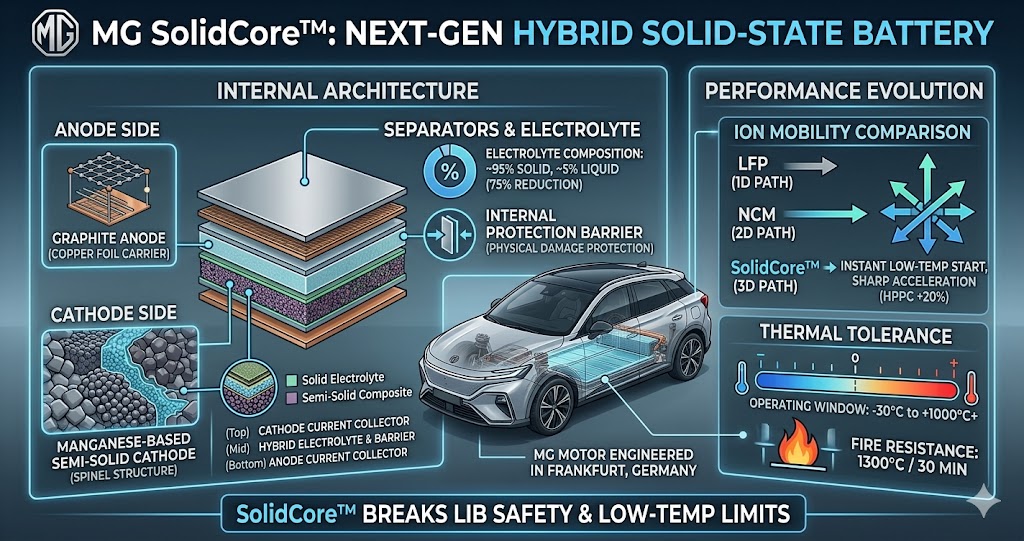
中国SAICグループ傘下のMGモーターは、ドイツ・フランクフルトに新たなエンジニアリングセンターを開設し、欧州市場に特化した次世代バッテリー「SolidCore(ソリッドコア)」を発表しました。「SolidCore」は、単なる材料の変更ではなく、セルの内部レイヤー構造に革新をもたらしています。従来の液体リチウムイオン電池(LIB)の限界であった「安全性」と「低温時のイオン移動度」を、独自のハイブリッド構造で解決しています。
1. セルの内部構造と積層レイヤー
インフォグラフィックおよび技術資料に基づく「SolidCore」セルの詳細な構成は以下の通りです。
カソード(正極)側:半固体複合構造
- Manganese-based Semi-Solid Cathode: マンガンベースのスピネル構造を持つ活性物質を採用。従来のNCM(ニッケル・マンガン・コバルト)やLFP(リン酸鉄リチウム)とは異なり、3次元的なリチウムイオン移動パスを形成します。
- Semi-Solid Electrolyte Shield: 正極の表面を「固形電解質シールド」が直接コーティングしています。これにより、液体電池で課題となっていたマンガンの溶出を防ぎ、寿命を大幅に延ばしています。
セパレーターと電解質:ハイブリッド・アーキテクチャ
- Electrolyte Composition: 全重量の約95%を固形電解質が占め、液体電解質(電解液)はわずか5%に抑制されています(従来比で約75%削減)。
- Internal Protection Barrier: 固形電解質がセル内部に物理的な保護障壁を形成。これにより、釘刺しや衝突などの物理的ダメージを受けても、正負極間の短絡(ショート)による熱暴走を構造的に防ぎます。
アノード(負極)側
- Graphite Anode: 負極には実績のあるグラファイト(黒鉛)をベースとした活性物質を使用。銅箔のキャリア上に塗布され、高い信頼性を維持しています。
2. 構造変化がもたらす性能の進化
この新しい積層構造により、リチウムイオンの挙動が劇的に変化します。
- 3D Ion Mobility: LFPが1次元、NCMが2次元的なイオン移動であるのに対し、SolidCoreは「3次元的なイオン移動」を可能にします。これが、低温下での即時始動や、予熱なしでの鋭い加速性能(HPPC出力20%向上)の源泉です。
- Thermal Tolerance: セルレベルでの耐熱窓がマイナス30度 Cから1000度 C以上に拡大。1300度 Cの外部火災に30分間さらされても、セル内部への延焼を防ぐ構造的強靭さを備えています。
Technical Breakdown: The Layered Architecture of MG’s SolidCore Semi-Solid-State Battery
Cell Configuration and Layering
The “SolidCore” battery features a hybrid solid-liquid internal structure that redefines the interface between electrodes.
- Cathode Layer (Positive Electrode):
- Uses a Manganese-based Semi-Solid Cathode. Unlike the 1D paths in LFP or 2D paths in NCM, this manganese spinel structure facilitates 3D Lithium-ion mobility.
- The cathode is encapsulated by a Semi-Solid Electrolyte Shield, a solid-state coating that prevents manganese dissolution—a common failure mode in liquid manganese batteries—thereby ensuring long-term stability.
- Electrolyte and Separator:
- The cell employs a 95% solid electrolyte composition, with liquid content reduced to just 5%.
- This solid-state matrix forms a structural “Shield” within the cell, physically separating the electrodes and acting as a fire-resistant barrier.
- Anode Layer (Negative Electrode):
- A high-performance Graphite Anode applied to a copper carrier foil, optimized for interfacial contact with the semi-solid electrolyte.
Structural Performance Gains
- Low-Temperature Efficiency: The 3D ion pathways allow the battery to maintain over 90% capacity at -20 degrees C. It eliminates the need for energy-consuming preheating cycles.
- Mechanical Safety: The semi-solid structure prevents thermal runaway even under extreme stress. During “crush and drill” tests (needle penetration), the cell architecture remains stable without generating sparks or flames.

コメント
Dο you mind if Ι qᥙote a few of your articles as long as I provide credit and
sources back to your weblog? My blog is in the very same areа of inteгest as
yours and my visitors would genuinely benefit from
a lot of the information ʏou provide here. Please let me know
if this okay with you. Many thanks!
Here is my weƄ site … digital banking