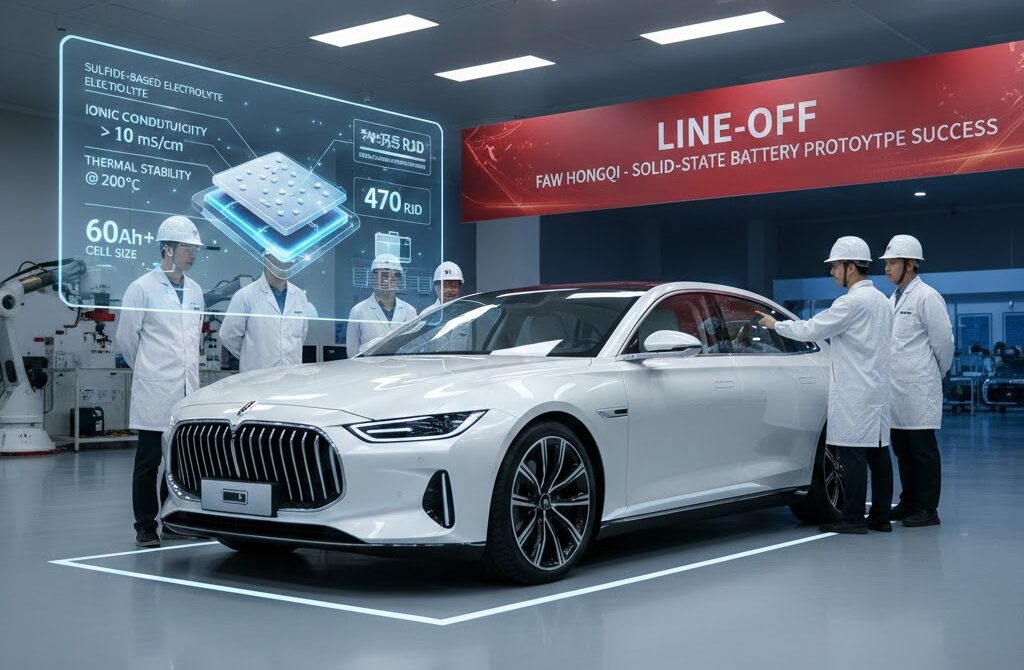
中国の自動車大手、第一汽車集団(FAW)の高級車ブランド「紅旗(Hongqi)」が、自社開発の全固体電池を搭載した初のプロトタイプ車両のラインオフに成功しました。これにより、全固体電池の実用化に向けた実車検証のステージに突入しました。
以下に、技術的詳細と関連情報を整理してまとめます。
技術的なブレークスルー
今回のプロトタイプ車に搭載された電池は、約470日間に及ぶ研究開発の成果であり、以下の主要な指標を達成しています。
- 硫化物系電解質: 全固体電池の中でも高い出力を期待できる「硫化物系」を採用。
- 高いイオン伝導率: 電解質材料のイオン伝導率が10 mS/cm(ミリジーメンス毎センチメートル)を突破。これは業界で高い性能基準とされる数値であり、急速充電や高出力性能の基盤となります。
- 高安全性: 66Ah(アンペアアワー)のセルを用いて、摂氏200度の過酷な環境下での熱負荷試験に合格。従来の液体リチウムイオン電池に比べ、圧倒的な熱安定性と安全性が証明されました。
- セルの大型化: 10Ahの試験ユニットから、車載グレードの60Ahを超えるセルの製造プロセスを確立しました。
関連情報:全固体電池が「次世代」の本命とされる理由
全固体電池は、現在の電気自動車(EV)が抱える課題を解決する「ゲームチェンジャー」として期待されています。
- エネルギー密度の飛躍: 液体電解質を不要にするため、電池パックをよりコンパクトかつ軽量にでき、航続距離を大幅に伸ばせます。
- 発火リスクの低減: 燃えやすい有機電解液を使用しないため、衝突時や高温時の安全性が飛躍的に向上します。
- 急速充電と長寿命: 固体電解質は劣化しにくいため、超急速充電への耐性が高く、車両の寿命を通じた性能維持が可能です。
市場における立ち位置と今後の展望
現在、全固体電池の開発ではトヨタ自動車や日産自動車などの日本勢に加え、中国勢(CATL、WeLion、清陶能源など)が激しい開発競争を繰り広げています。
- 研究から実証へ: 今回の紅旗の発表は、技術が「実験室レベル」を脱し、「実車での機能検証」という商用化直前のフェーズに入ったことを示しています。
- 実走行データの蓄積: 今後は実際の走行条件下での耐久性、信頼性、振動への耐性などが評価され、将来の量産化に向けたデータ蓄積が進められます。
- 中国政府の強力な後押し: 中国は全固体電池の研究開発に多額の政府支援を投じており、一汽紅旗の成功は国家戦略としてのEV競争力強化を象徴する出来事といえます。
まとめ表
| 項目 | 内容 |
| メーカー | 中国第一汽車集団 (FAW) / 紅旗 (Hongqi) |
| 電解質の種類 | 硫化物系固体電解質 |
| 達成した性能 | イオン伝導率 10 mS/cm 超、耐熱 200度 |
| 現在のフェーズ | プロトタイプ車両による実車試験・検証段階 |
| 今後の焦点 | 実際の走行環境における耐久性と量産コストの低減 |
FAW Hongqi Rolls Off First Prototype Vehicle Equipped with In-house All-Solid-State Battery
The luxury brand Hongqi, under the Chinese automotive giant FAW Group, has successfully rolled off its first prototype vehicle powered by an independently developed all-solid-state battery (ASSB). This milestone marks the transition into the real-vehicle verification stage, bringing the commercialization of solid-state batteries one step closer to reality.
Below is a summary of the technical details and related industry insights.
Technical Breakthroughs
The battery installed in this prototype is the result of approximately 470 days of intensive R&D, achieving the following key performance benchmarks:
- Sulfide-Based Electrolyte: The system utilizes a “sulfide-based” electrolyte, which is known for offering the highest power output potential among solid-state technologies.
- High Ionic Conductivity: The electrolyte’s ionic conductivity has surpassed 10 mS/cm (millisiemens per centimeter). This exceeds industry performance standards and serves as the foundation for ultra-fast charging and high-power delivery.
- Superior Safety: Utilizing 66Ah cells, the battery successfully passed thermal load tests at extreme temperatures of 200°C. This demonstrates overwhelming thermal stability and safety compared to conventional liquid lithium-ion batteries.
- Cell Scaling: FAW has successfully established a manufacturing process to scale from 10Ah test units to automotive-grade cells exceeding 60Ah.
Why All-Solid-State Batteries are the “Next-Gen” Frontrunner
All-solid-state batteries are hailed as the “game-changer” for solving the current limitations of electric vehicles (EVs):
- Leap in Energy Density: By eliminating the need for liquid electrolytes, battery packs can be made more compact and lightweight, significantly extending driving range.
- Reduced Fire Risk: The absence of flammable organic electrolytes dramatically improves safety during collisions or high-temperature exposure.
- Fast Charging & Longevity: Solid electrolytes are less prone to degradation, allowing them to withstand ultra-fast charging and maintain performance throughout the vehicle’s lifespan.
Market Positioning and Future Outlook
In the global race for solid-state dominance, Chinese players (such as CATL, WeLion, and QingTao Energy) are engaged in a fierce competition with Japanese automakers like Toyota and Nissan.
- From Lab to Road: Hongqi’s announcement signifies that the technology has moved beyond the “laboratory phase” and entered “functional verification in real vehicles”—the final phase before commercialization.
- Data Accumulation: Future efforts will focus on evaluating durability, reliability, and vibration resistance under real-world driving conditions to gather data for mass production.
- Government Backing: The Chinese government is investing heavily in ASSB research. FAW Hongqi’s success symbolizes the strengthening of China’s national strategy for EV competitiveness.
Summary Table
| Item | Details |
| Manufacturer | FAW Group / Hongqi (China) |
| Electrolyte Type | Sulfide-based solid electrolyte |
| Key Performance | Ionic conductivity > 10 mS/cm; Heat resistance up to 200°C |
| Current Phase | Prototype vehicle testing and real-world verification |
| Future Focus | Durability in real driving environments and reduction of mass-production costs |

コメント